When I was young, I watched and played so much football, I couldn’t really countenance other sports. Sport, in my formative mind, was fast, athletic and explosive, the idea of tactics and strategy bored me. To some extent, it still does, sports that layer their drama gradually and painstakingly to reveal their truth, concealing it beyond reach until the very end, struggle to keep my attention.
I’d watch a 10-second, 100m sprint, but couldn’t conceive field events which lasted two or three hours. I’d watch tennis because it rewarded you with a point every thirty seconds, but snooker, cricket, or a three-week bike race quickly lost my attention.
As I’ve got older, I’ve become more aware that the days go slow, but the years go fast. Seeking out those hedonistic highs – goals and wins – just allows time to slip by unnoticed. Before you know it, it’s thirty years later, and you’ve forgotten the moments that took you down this path.
I’ve become more conscious of the context in which the moments happen, more mindful that each fleeting moment is revealing itself to create something else. I guess it’s a way of slowing down time.
Most games of football have the potential for a range of results, if someone asks me to give a prediction, my usual answer is always something like ‘expect a draw, hope for a win’ or ‘hope for a draw, expect to lose’. I never go into a game with a definitive idea about what’s going to happen.
You hear it in post-match analysis; often, if we draw, we lament the chances we had to win, but if we win, we relive the moments which could have turned it into a loss. Most games have a result, and a series of credible alternative outcomes that the same game could have produced. So, even if you do secure three points, it equally could have been a point or none.
A three-point win needs to be put into the context of the results of teams around us. Before the Ipswich game, we were in the relegation zone by a point. After all the fixtures had been played, we were out of the relegation zone by a point. We’d won three points but only gained two.
Then put that into the context of a season, we survived by a relatively comfortable four points over forty-six games last year, that’s 0.08 points per game. You can win or lose a game, gain or concede three points on any given Saturday but it’s going to give you a massively disproportionate view of the bigger picture. If you become too consumed by the moments, you let the years slip by unnoticed.
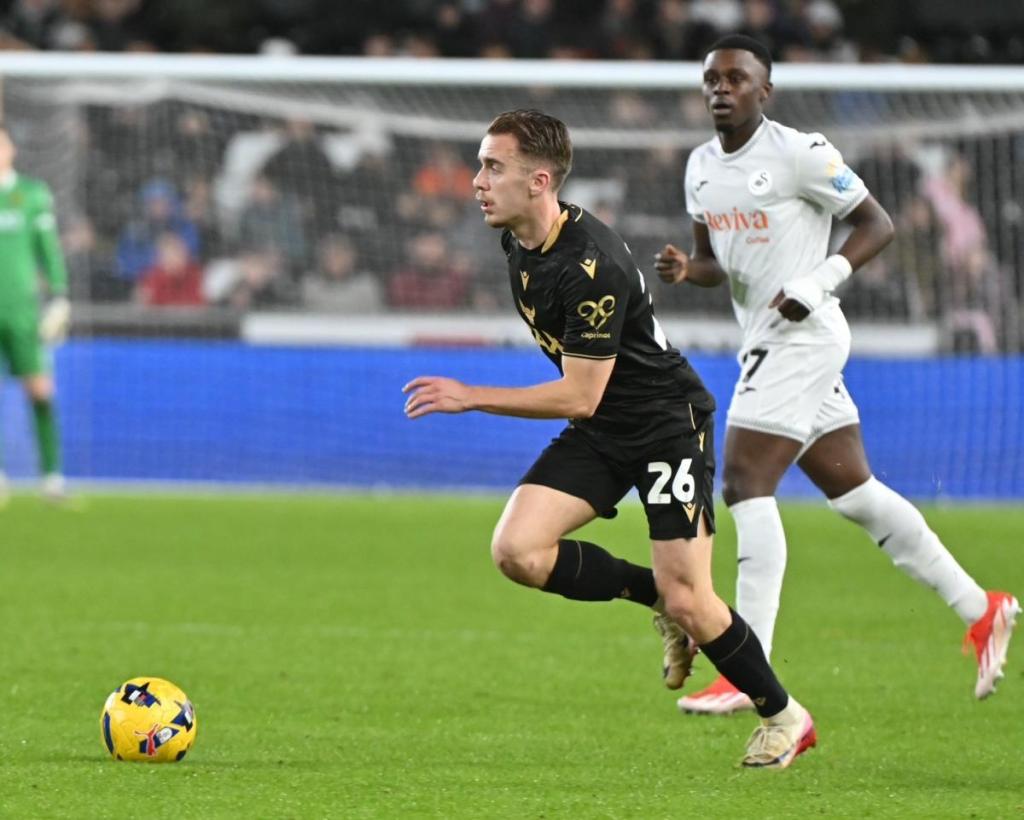
We went into the Swansea game on a relative high having smoked Ipswich last week. The Swans were in free-fall; five straight defeats and one win in ten had seen them plummet to just outside the relegation zone. This was our chance to put space between us and the bottom three.
But, we’ve never been great widow makers, we rarely twist a knife that’s already been plunged deep into the heart of a club. This season alone, we’ve allowed Sheffield United, Norwich City and now Swansea City to break losing sequences.
But, equally, the reason sequences become a conscious thing is because they’re unusual. And when things are unusual, they’re more likely to come to an end and be more usual. This is in contrast to, say, Middlesbrough, who’d won one in seven, including a draw against us. Or Ipswich, who didn’t win two games in a row in November and blow more hot and cold than we might perceive. On both of those occasions, we contributed to the wobbly form of good sides. At no point did anyone claim those games were must-win or should-win because of the form our opponents were in. So, the trip to Swansea was always likely to be a more perilous encounter than we thought simply by virtue of it being an away game in the Championship.
I didn’t follow the game that closely, spending most of the time stuck in a connectivity black hole in Winchester. Every now and then, I’d find a connection and get a flurry of Twitter alerts, but the latest update to IOS on my phone uses Artificial Intelligence to summarise my tweets. When Stamenic scored Swansea’s opener on 39 minutes, the tweets combined the fact there’d been a goal with the flurry of criticism from Oxford fans about our static defending. The conclusion of the AI was that we’d scored – ‘Goal at Swansea Oxford; Long back post’ it said.
It didn’t take long to realise that Long hadn’t replicated his goal at Sheffield Wednesday last year. Going into the break a goal down would have been retrievable, but a wonder strike from Josh Tymon in injury time put the game out of reach and opened a chasm of opprobrium. On another day he might have mis-queued his shot and spooned it over the bar, on this day he hits it as sweetly as any ball he’ll hit in his career.
The reaction to the result, naturally, was disproportionate. Some Oxford fans called for Gary Rowett’s head, though I don’t think that’s a majority by a long way, equally some Swansea fans reacted like they’d just won the Champions League. The side which beat Ipswich were now a catastrophe, that wonderful performance was re-calibrated as luck.
And yet, we have the same number of points we had after 19 games last season, we’re out of the relegation zone by a point, we’re not winning consistently, but we’re not losing consistently. Between the 21stSeptember and 21st December last season; we won one game, in the same period this season, we’ve already won four. Of course, everyone wants us to be consistent, to win games we ‘should’ win, but these are all the fevered mind of a fantasist.
This is the real challenge of any season, we want to rush to the end to find out if we’re going to be OK. We want to use moments of games to foretell the outcome of the season. And yet, any single defeat or win contributes tiny amounts to the overall picture. Defeats to an apparently poor team aren’t catastrophic, a win against a promotion hopeful is not a sign of our potential. The truth sits somewhere in between those two extremes and won’t reveal itself properly until May. In the meantime, we seek out signs and signals of what the future holds until we’re driven into a foaming madness.
Which is the nub of the issue; teams which go down are ones which break mentally. The insanity that comes from speculation releases a flood of toxicity into the blood flow of the club. Managers get fired, players blame each other, fans dismiss wins as luck and almost wallow in defeats because they confirm their deepest fears. There will be plenty more games like this; ones we expect to win but don’t, equally, there will be games we don’t expect to win, but do. The real truth will only reveal itself slowly, we shouldn’t let the fever consume us.


 Oxblogger
Leave a reply to Unwrapped | Blackburn Rovers v Oxford United – Oxblogger Cancel reply