There was a lot of debate about the Baxi Light Show before last night’s game. We’re not at a Coldplay concert, there’s a tacit agreement about the behavioural norms when you go to a game. Regulars want to be recognised for their dogged persistence and dedication; they don’t want to be inculcated in something so seemingly celebratory, it suggests we enjoy this stuff.
Perhaps it’s protecting us from the fact we sacrifice so much time, money and identity, on something which is obviously miserable and humiliating much of the time. We want people to think this is a vocation, that we’re normal people burdened by our modality; that we’re somehow carrying out a moral and metaphysical duty. We’re misery monks, discarding the norms of existence to dedicate our souls to absorb the shadows of desolation for humanity; a selfless dedication.
In the South Stand, people stared at the phones as the app blinked, something had taken control, it was no longer our phone, it was owned by the sinister omnificent Baxi Light Show. Quite what it was planning to do wasn’t clear, it was hard not to think about the Israeli secret service attack on Hezbollah last year where they remotely detonated pagers that were in the pockets of their targets. Erik Thohir was in the crowd, he’s a powerful man of means, surely, he wasn’t behind this? It would be an odd way to stage a coup; start by signing Djavan Anderson end by taking over the country live on Sky Sports.
Like most of the innovations the club has introduced to the matchday experience over recent years, it worked. The show was good, despite the straining, crackling speakers struggling to contain the volume of Prodigy’s Voodoo People, the flamethrowers, the dancing floodlights. Have you noticed nobody ever talks about the drum that now pounds away in the East Stand?
The problem, of course, is that all this can sit in stark contrast to performances on the pitch. Particularly now, having slipped meekly and inevitably into the relegation zone during the week. It’s been a ferociously difficult period, all we needed was Ipswich Town, hoping to go second, unbeaten in six having scored ten goals in their last three away games.
The first instruction on the app for the Baxi Light Show was ‘Be at the venue’, which you imagine really helps with this kind of thing. It seemed to translate onto the team, Mark Harris shedded his disinterested, drifting, actively chasing down defenders and sprinting after hopeless causes. Filip Krastev has occasionally looked like a lost student at Oxford, but over the last couple of games he’s shown an application which forces teams to rush and hurry. The renewed dynamics pick away at any platform your opponents hopes to build.
In midfield, Brian De Keersmaecker has sometimes looked like he’s struggled to fit into a midfield dominated by Cameron Brannagan, but with Brannagan out, he was freer to make it his own space. The others; Vaulks, Helik, Long, did what they always do, Brown, sliding fearlessly into a challenge not unlike the one that recently put him out for six months, set the tone. The tweak of intensity and increased presence is making a huge difference.
At one point, their hulking brute of a centre forward, George Hurst picked the ball up. Suddenly he was surrounded by four or five players, like zookeepers trying to cajole a rhino into a transporter they jockeyed him into a mistake. The question was, how long could we keep it up?
After the game Rowett talked about how Ipswich build their attacks. Their aim was to establish a territorial base which would pressure us into mistakes. But like against Middlesbrough, we didn’t allow it to form, we chipped away even though we had little of the ball.
You suspect this is how it was supposed to work against Norwich, but where they snaffled the opening goal on Tuesday, we held firm and struck first. The goal came from presence and pressure; Matusiwa, monitored closely by Harris, scuffed his back pass to the keeper allowing the striker to pound and fire in at the second attempt. It was his first goal for eight months, you suspect it needed to be instinctive to break his duck, drawing from a deeper subconscious, but it was the product of his work in the previous 23 minutes.
The equaliser seven minutes into the second half was well taken, but we were static from the corner, too absorbed with the players in the box to notice those on the edge waiting to benefit from any knockdowns. Maybe we could have made it more difficult than it was.
Despite that, the presence and intensity had worked, we’d got to the final third of the game still in with a chance. One of Gary Rowett’s favourite phrases is ‘A little bit more…’ – sharpness, aggression, risk taking, he’s always looking for a little bit more. Now we needed a little bit more.
Rowett introduced Lankshear and Placheta and ten minutes later Goodrham and Romeny. The relief attack, the one many would have choosen to start. Fifteen minutes to see if we could snatch the game. The impact was almost instant in the last quarter of an hour; Lankshear nearly scored from Vaulks’ long throw, Romeny blasted narrowly over, Goodrham’s snapshot nearly sneeked in.
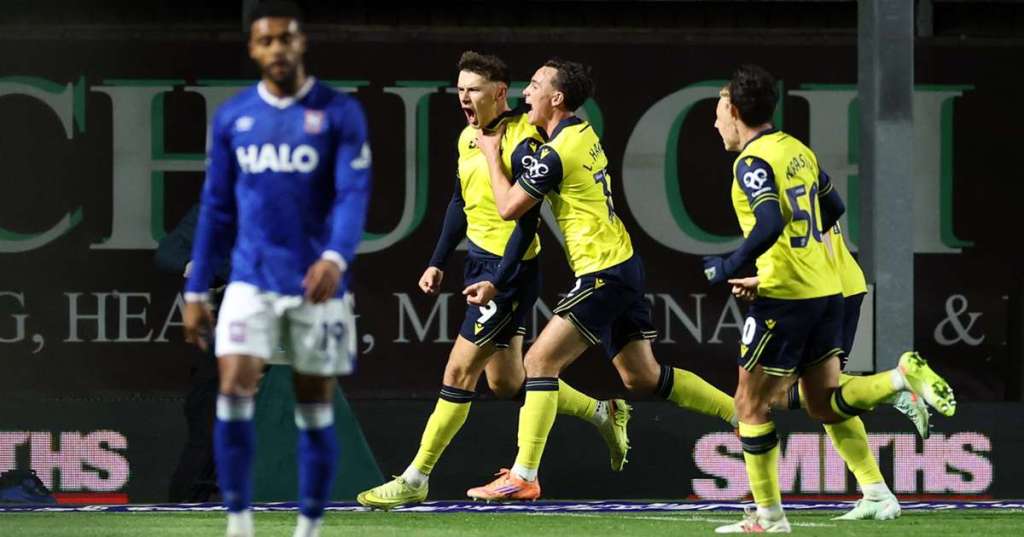
With 13 minutes left, De Keersmaecker picked up a cushioned header from Brown, finding himself in space he looked up to see Placheta had detonated himself down the right wing. The Pole does this all the time, but often nobody has the speed of thought to find him. This time De Keersmaecker ball launches and suddenly the whole game is open. Ipswich are reeling.
We’ve spent three-quarters of the game as an irksome presence stealing pieces of their platform, never letting them settle. And then, suddenly everyone apart from Placheta seems to disappear into the shadows. He takes the ball down and cuts across Furlong scything him out of the game.
Now it’s about composure, Placheta faces Christian Walton, the swiftness of the move, the fluidity is channelling through him. Now everything is incidental he stares only at the ball, instructing it, as if telepathically connected, it’s all instinct, Walton can’t get down quickly enough, the ball is in the net before he knows it.
The goal unleashes a tornado, familiar and yet unfamiliar, like a coiled spring, an eruption. The last few minutes are frantic; everything is now instinct. Cumming saves from close range, every time the ball lands at the feet of an Oxford defender, they simply release a willing runner to burn up time and space. Nothing Ipswich does works you can feel their confidence wilting with every thwarted move, eventually the referee blows, and the joy sweeps around the ground.
It’s been a horrible six days; Middlesbrough in the driving rain, then a game we couldn’t win – literally or psychologically – against Norwich and then Ipswich on TV. We come out of it outside the relegation zone and unbeaten. Every time it feels like it’s over, something infuses the angst with hope, the monks of misery are reminded why they make their sacrifice.

 Oxblogger
Leave a reply to Unwrapped | Ipswich Town v Oxford United – Oxblogger Cancel reply