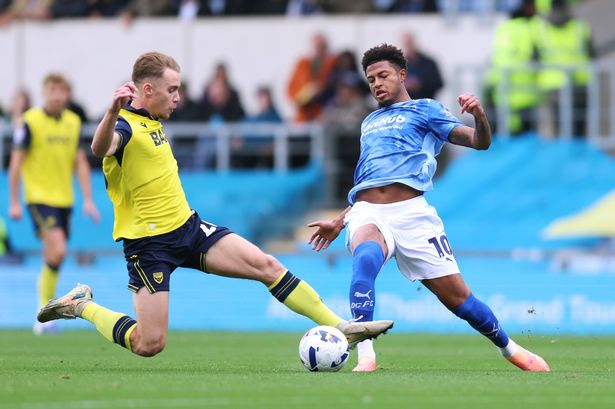
As we’ve been navigating the early phases of the season, there’s been lots of dark talk about us succumbing to Second Season Syndrome like it’s a looming shadow and an ethereal spirit trying to drag us down.
But, while everyone seems to have understand its symptoms – in effect, relegation – nobody has really defined its causes. If you can do that, then perhaps you can avoid making the mistakes that lead to it.
The first question we need to answer is whether it exists. The answer to that is sort of. Since 2013, seven sides have lasted two seasons before returning to League One. However, this is less than the number who have lasted for just one season (ten), while sixteen have more than two seasons, thirteen of which have yet to return to return at all.
So, it seems to be psychological, surviving your first season is difficult, but maybe not unexpectedly so. The truth is, once you’re through that first season, you’re more than twice as likely to survive a second season than be relegated. So, where did the teams who suffered second season syndrome go wrong?
Of the seven, only Burton had no obvious reason for being relegated in their second season. Maybe we can reasonably surmise that they just weren’t big enough to survive very long, and that staying up in their first season was an over-achievement.
Of the other six, Barnsley, Bolton and Wigan were all uprooted by financial and ownership turmoil, while Plymouth, Rotherham and Blackpool were skittled by a management mess.
Self-inflicted disruption appears to be at the heart of second season syndrome and at the heart of that is an identity crisis. There’s often a belief that after getting through your first season that its time to ‘kick-on’ – in other words, you don’t suffer any of the relegation-haunting traumas of the previous season. The problem is that shifting from a relegation survivor to a mid-table cruiser or better requires far more than, for example, appointing a celebrity manager like Wayne Rooney.
That sort of decision simply sits on top of your fundamental challenges, real investment should soaks into your club, slowly, subtly changing its flavour. It’s like adding a bag of salt to a soup in order to improve its taste rather than stirring in your seasoning and allowing it to blend in and enhance what you already have.
How you survive the temptation to disrupt is the question that faced both Oxford and Derby going into Saturday’s game. Both had started the season looking to improve on seventeenth and nineteenth place finishes, neither wanting to leave it to the last couple of games of the season to confirm their survival.
And yet, once the season got underway, those ambitions seemed to evaporate as both sides drifted had towards the bottom of the table, struggling for wins despite encouraging displays. The temptation to panic was palpable.
Derby, at least, look like they should be an established Championship side; they have the history, the stadium, the brand that should see them sitting comfortably in mid-table at least. For as long as we’re at the Kassam, with its gaping open end, we will always look slightly out of place. It’s a constant reminder that until the new stadium is built, we remain incomplete as a club. For once, the views of the Bowlplex may prove useful.
Gary Rowett had spent the international break ruminating about his next move after the frustrating capitulation to Watford. Immediately after that game he seemed unsure about what to do but was refreshingly honest about that. He’s a stark contrast to Karl Robinson who claimed to always know the answer to problems, without ever giving away what that might be or showing any evidence of applying it.
Rowett’s response was a re-shuffle; Greg Leigh’s benching was no surprise given his travelling commitments with Jamaica, but the real focus was to add steal to the middle of the park. Lankshear was dropped and Vaulks brought in as an anchoring point in midfield allowing Brannagan to move forward as a less offensive number 10 behind Prelec. While Long was replaced at the back, few would have predicted that Ciaron Brown would start ahead of Ben Davies.
There were risks, would the changes invite them to attack? Weren’t they there to be beaten? Could we muster enough forward momentum to actually win a winnable game? Rowett was often criticised last season for his pragmatism and defensiveness, the changes seemed to be reverting to that; hardly a sign of us ‘kicking on’ this season.
It would be remiss to not mention that the game was themed around the ‘Can We Talk’ campaign that focusses on mental health and suicide prevention. Mental health is often about negotiating the gap between what we are and what we think we should be, so perhaps it was apt.
These themed games often go off unnoticed, but Mike McCarthy, founder of Baton of Hope was able to hold the stadium in near silence to promote the need to for compassion to prevent future suicides, particularly amongst young men and women.
Football clubs offer a platform like no other, it’s hard to imagine another scenario where 11,000 people, many men, many who would scoff at the very idea of ‘mental health’ would be held in such rapture. The club should take great pride in what it’s achieving with this campaign.
Once the game was under way, while the defensive solidity returned, the quality of Stan Mills, Jack Currie and Brian De Kersmaecker was still able to unlock a Derby side who were plodding and uninspired.
Mills had already missed a chance before he was set clear by De Kersmaecker to race in on Derby keeper Jacob Zetterstrom and slide the ball into the net after 24 minutes. In response, Derby offered little, relying on Zetterstrom to put in a spectacular display to keep the score down. They had their moments, packing the six-yard box for corners, which had undone us at Watford, but unlike at Vicarage Road, the deliveries were poor and easily defended.
Any fears about Brown were unfounded, he wasn’t player of the match as the sponsors decreed, but you suspect he applies the same in-game intensity when making a cup of tea, so returning to the fore probably didn’t feel like a step up.
The key obstacle to negotiate was the referee who seemed to be suffering an identity crisis of his own. He was stuck in a binary mode, either allowing the game to flow and let robust challenges go unpunished or calling fouls and booking the perpetrator. There was no middle ground. As a result, it was hard to know whether the game was simply physical or dirty.
Either way, it was hardly a spectacle, but while we seemed to lean into the challenge, Derby grew more frustrated. Audible groans from their fans was sweet music to our ears, when they won corners, their reaction was the polite applause that you might offer a county cricketer sweeping away for four. Their expectations were being crushed before our eyes.
As a result, we were able to exploit the psychological space between the expectations of their fans and the reality of their players’ ability. We could have added more, but it was perhaps more satisfying that we didn’t. It meant a clean sheet and a demonstration of control that should put us in good stead in the future.
It was a reminder that this is who we are now, an upgrade from last season, but not a transformation. The win was the fourth time we improved our equivalent fixture last season while only the loss to Sheffield United represented a worse result. The improvements are subtle, but they do seem to be there. The challenge of Second Season Syndrome, is accepting that this is where we are right now.

 Oxblogger
Leave a reply to Unwrapped | Sheffield Wednesday v Oxford United – Oxblogger Cancel reply