Football’s appeal is that it allows you to access a broader emotional register than you would normally be allowed. You can be funnier, angrier, meaner, happier and less objective than you would otherwise in the normal world.
It’s important, we all need somewhere to release our inner child. A friend was recently telling me about a member of their team at work who, in a moment of petulance, said something which, in a less forgiving environment, might have ended in their dismissal. This one comment resulted in a lot of work to repair the damage it caused. Perhaps they just needed the sweet release of a game to manage their internal frustrations.
Of course, there are times when this goes wrong. After all, the constraining social mores that dictate how we should behave are there for a reason.
Our trip to Ashton Gate in September seems like it was from a different age. There were inflatable snakes being waved towards Liam Manning, Des Buckingham was metaphorically carried in on our shoulders to smite his predecessor who, it seemed, was teetering on the edge of being sacked. Even when that didn’t happen, and City hit back to pick up three points, we still claimed a moral victory ignoring that the millions being poured into the club over the summer by its benefactors were dribbling away to no effect.
Then things shifted, first Jack Badger committed suicide, then two weeks later George Baldock passed away and days after that Liam Manning’s newborn son Theo died. All that vitriol and spite looked distasteful and ugly in the light of real life.
There’s a lot of talk about getting things into perspective, but I don’t think anyone should need to apologise for any of this, if you can’t differentiate between the pantomime of football and tragedies of real life, then you’re not a serious person and your problems are way deeper than you know.
None-the-less, that shuddering, sobering period, along with our autumnal collapse saw the dawn of a new, more rational age and the narrowing of our emotional spectrum. The return of Liam Manning on Saturday promised to be an altogether more sensible affair.
There’s a rationality to the middle section of the Championship we just about occupy. It looks like the World Darts Tour or professional cycling, essentially, it’s the same people competing against each other year after year, just with different coloured jumpers on.
It’s a factor of the modern age; we want to be so empathetic to footballers, we accept the ruthless decisions they make about their careers. Players run their contracts down and walk away from the clubs that nurtured them. When Rob Dickie, Luke McNally, Mark Sykes and Marcus McGuane left Oxford, we sagely accepted their moves because it was good for their careers. Now they were lined up like Cameron Brannagan’s all-star testimonial opponents, and nobody knew whether to cheer, boo or ignore them.
This cabal of players, managers and even fans operating in the narrow emotional gauge of the middle of the Championship know each other inside out. As a result, the game against City opened as a taught, unyielding affair loosened only by a referee determined to paint himself into a corner with a series of bookings presumably designed to bring the players to heal but that only served to destabilise the status quo.
The pivot came after half an hour when Joe Williams cleaned out Will Vaulks. Frankly, nobody could have predicted the referee’s response. Vaulks leapt to his feet, incensed by the challenge, giving off the energy of a dad whose daughter has found herself on the wrong side of a marginal decision at a soft play centre. Cameron Brannagan puffed his chest out and pursued the grinning Williams and there was a melee we’d be appalled to see in a shopping centre but thrilled to watch here.
Williams’ red card was more for the lack of control than the application itself, it could have been nasty, but probably wasn’t, but equally he couldn’t be sure which of those outcomes it would be.
If anything it played into Manning’s arid dry playbook, his team could stick to its game plan and frustrate. He replaced Scott Twine, who was too wrapped up in the drama and had been booked, the aim was to stay calm, sit and wait.
We’re not a team that’s going to throw the kitchen sink at teams to overwhelm them. That takes a huge amount of energy and talent and most teams at this level are too savvy for that. City are certainly one of those. the sending off had little impact on the ebb and flow of the game.
Placheta and Dembele danced menacingly in front of the City defence, but Williams’ dismissal did nothing to impact its integrity and they remained solid.
After an hour Ciaron Brown hammered a drive off City’s defensive brick wall in frustration, the ball returned to Brannagan who shaped to shoot and was also thwarted. The ball arrived at Greg Leigh’s feet on the left.
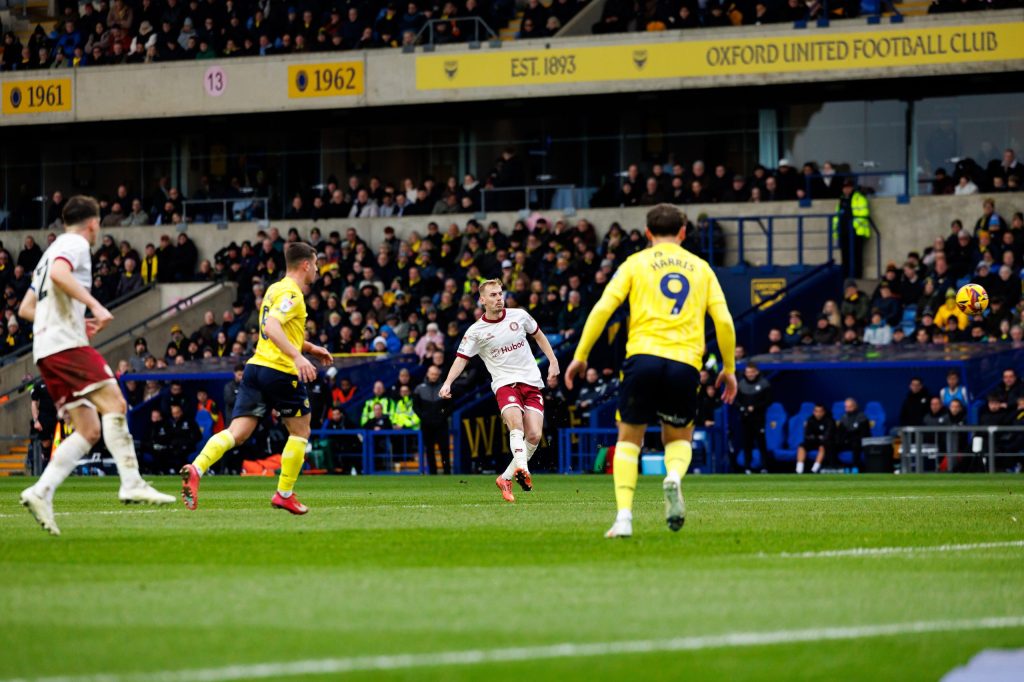
Having found himself on a different metaphysical plain to score against Luton, Leigh seems to have discovered an entirely new conceptual realm on the football field. Like Pythagoras, he simply invented a new angle along which to shoot. The ball arrowed through a crowd of players across the goal and into the bottom right-hand corner. It was so bizarre it probably had an xG of βφμ2.
We were in prime position, but it just narrowed Liam Manning’s options further. Without the personnel to play through us and with us not needing to stretch the game, Manning would have to go for territory.
It took just six minutes; Helik’s clumsy challenge drew a foul and City shaped to put a ball in the box. It made sense, the data would have said that was the best option, and Manning is all about the percentages. Instead, they slipped the ball to Mark Sykes on the edge of the box who rifled it into the top left-hand corner. No complaints, it was clever and executed to perfection. Sykes wheeled away punching the air and screaming in a hugely disrespectful way, good for him.
City’s gameplan was clear, snatch something if you can, but don’t worry if you can’t. Brannagan raced back to thwart George Earthy who’d made a lone escape from the siege. Brannagan’s recovery brought a response from the crowd that was almost louder than the goal.
Then McCrorie threw himself into a challenge with Ciaron Brown, which was dumb considering he was already booked. The right-back was walking before the referee confirmed he’d reduced City to nine. If anything, it simplified the equation further, they just needed to hold out and we did little to test that.
While the sendings off point towards ill-discipline and recklessness, I can’t help thinking it’s, if not part of the plan, then already priced into Manning’s calculations. We were reduced to nine a couple of times under him and it doesn’t seem to trouble him greatly. Pushing things to the edge is part of the plan.
It was frustrating because you’d expect to win against nine men at home, but in our calm rational thoughts, we’d have taken a point before kick-off. This pragmatism, presumably, is the life of middling Championship football.
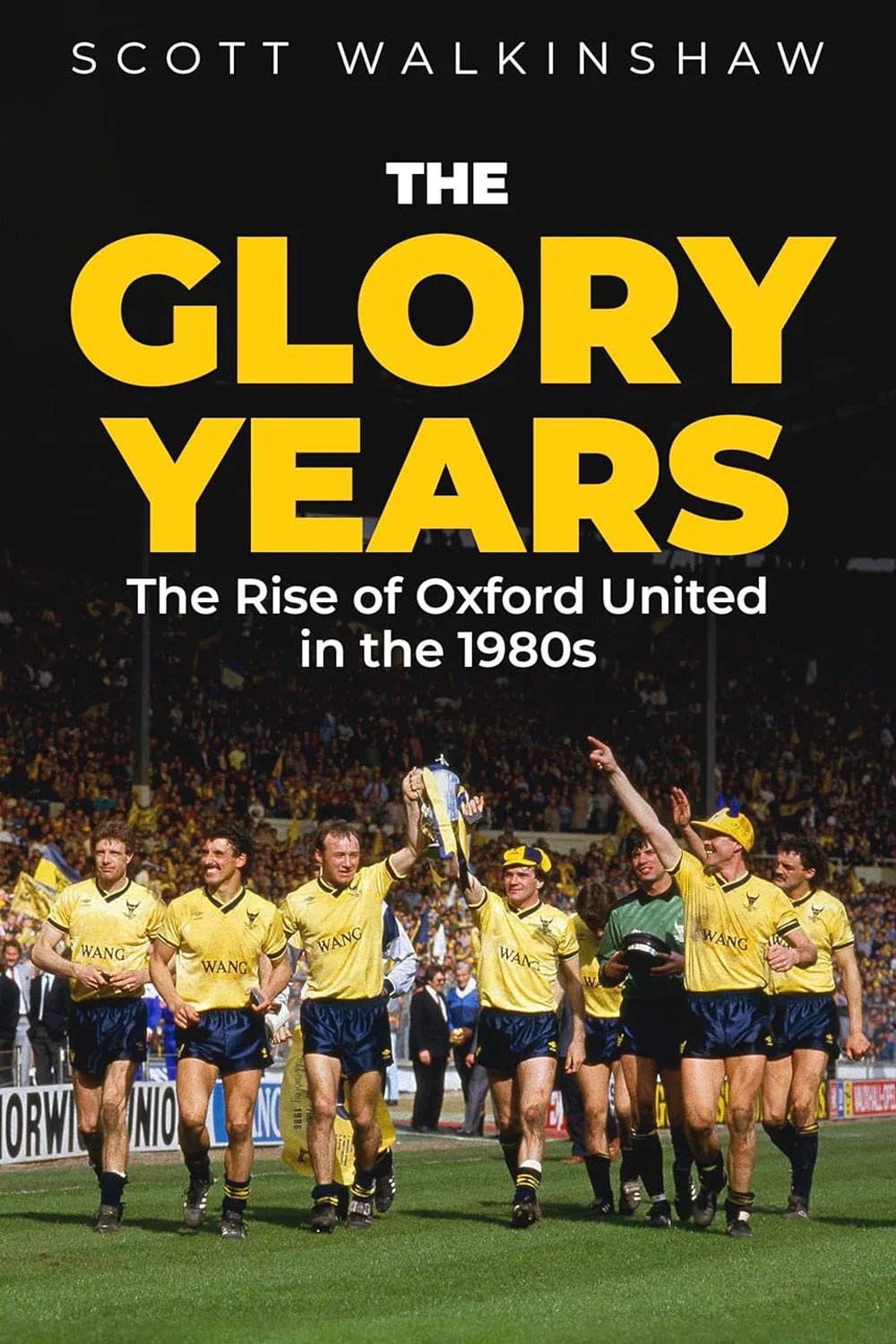
Out now – The Glory Years
The Glory Years, the story of Oxford United’s rise through the divisions from the verge of bankruptcy to Wembley glory in the 1980s is out now.
You can buy it now here or is in stock at Waterstones in Oxford, Witney, Banbury and Didcot.

 Oxblogger
Leave a comment