
The appointment of Des Buckingham was pre-destined, the Oxford Mail had followed his progress around the globe for years. For a period, he was the watchword for a quiet news day, if nothing was coming out of the club, somewhere in a different time zone, the former Oxford youth coach was always achieving something vaguely reportable.
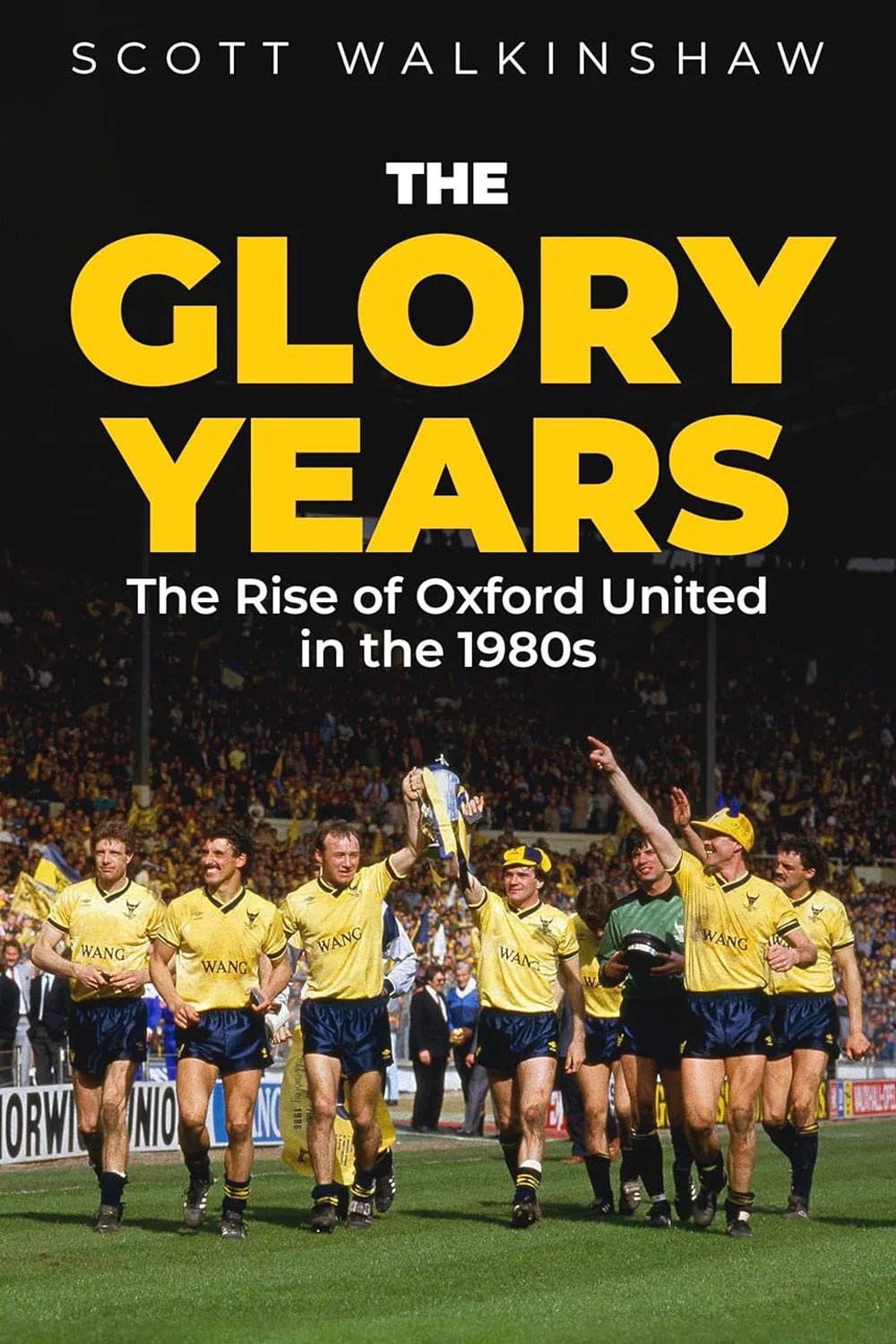
The narrative was compelling; the Cowley boy was a protégé of Mickey Lewis, a multi-layered Oxford legend who’d replaced another legend, Trevor Hebberd, scorer of the first goal in the Milk Cup final in 1986. Buckingham continued a golden thread that stretched back decades.
He came with a stamp of approval from Chris Wilder, a man who didn’t carry passengers and had no sentiment for golden threads and narratives. Wilder had eased him into the professional game and gave him the stepping stones that allowed him to travel the globe. It was an Odessey in which he developed a rich tapestry of experiences in New Zealand, Australia and India. Buckingham was erudite and cosmopolitan, thoughtful and modern, he embodied his hometown.
Des spoke about his Nan taking him to The Manor. That formative experience was leapt on. We wanted to believe he was a boyhood fan, although he never quite went that far. His favourite players were Paul Moody, Joey Beauchamp and Matt Elliott, he once said ‘he believed they once played together’; it hardly suggested someone with a deep knowledge of 1990s Oxford United.
It mattered little, his story was already racing ahead of him. When Liam Manning resigned to go to Bristol City, the time had come. We loved Manning’s results, but we didn’t love Manning, he was too calculated, too distant. He’d been a palette cleanser after the chaos of Karl Robinson, but it was hard to embrace him fully, partly because he would allow us to.
By this point, like Manning, Buckingham was a fully-fledged graduate of the evil City Football Group empire. We liked to believe he’d been given the secret elixir of eternal success, while retaining a warm heart.
An emotional departure from Mumbai did nothing to temper the momentum, but on arrival in the UK Buckingham looked bewildered, it probably felt like we’d appointed a version of a Des Buckingham that somehow wasn’t him.
At first, he promised not to make changes, we were second in the table and going well. We wanted change, as long it was the right kind of change. We’d constrained him with our overwhelming support.
In truth, he’d inherited a squad who’d been lured in by Manning’s fabled PowerPoint presentations and then abandoned. His predecessor had gutted the club’s backroom staff. Not only was Buckingham every one of us, he also had to be every one of everyone else as well.
His first games were disrupted by cup competitions, but the early signs weren’t good. A league defeat to struggling Cheltenham preceded a battering by Peterborough and a lacklustre draw at Reading.
It didn’t get much better, we lost an early two-goal lead to Derby to lose 3-2, we were crucified 6-2 by Coventry. James Beadle returned to Brighton having been outstanding in goal.
Despite just four league wins in fourteen, the narrative remained intact, just.
Then came Bolton, no amount of narrative could excuse the pummelling we received live on TV. We were devoid of spirit, lost in a confusing whirlpool plotlines. The Buckingham story seemed to be a fairytale; the brothers Grimm couldn’t have conjured up a bleaker yarn.
Something had to change, including, perhaps Buckingham himself. Perhaps his career was a fiction, maybe the rugged realities of League One were exposing him in the way the feebler environment of the Indian Premier League didn’t. There are lots of good coaches, but far fewer good managers.
Then came an alignment. Buckingham was lost but so was Josh Murphy. Karl Robinson had tried to batter Murphy into a return to form. Robinson had labelled him ‘the best player in League One’ a narrative he didn’t want; it was like a sword of Damocles hanging over his head. Both had been given a unwanted label they didn’t want, both needed to find a way back, both had little more to lose.
Buckingham made changes for the trip to Port Vale four days after the Bolton massacre, Marcus McGuane was dropped to the bench, Joe Bennett and Sam Long added to bring defensive assurance. It released Murphy dominate and score in a 2-0 win. The release of pressure jettisoned us forward – 4-0 against both Fleetwood and Burton, and a mesmerising 5-0 annihilation of Peterborough came quickly after. The smiles returned, the stands re-animated, the club merged as one.
The play-offs were back on but a defeat against Lincoln and draw to Stevenage left the fate of the season out of our hands. John Mousinho’s Portsmouth romped to a valedictory win over Lincoln allowing us to snatch a play-off spot with a 2-1 win over Exeter. Buckingham at least had that, though few expected us to progress further.
In four heart stopping, blistering days, Buckingham out-thought and out-fought Peterborough boss Darren Ferguson to win the play-off semi-final, the club was symbiotic and totally focussed. All expectation had cleared away, allowing for a fresh narrative to emerge.
We arrived at Wembley with a clear head and clearer focus. We weren’t expected to beat Bolton and didn’t expect it either. Far from the claustrophobic weight of expectation he’d encountered, Buckingham now had space to think, he deployed Mark Harris to neutralise the Bolton threat. It unleashed Murphy to drive us into the Championship. Emotionally, spiritually, tactically, it was one of the great days in the club’s history.
The celebrations were wild, Buckingham was king of the world, the prophecy had been realised. Backed by the owners and freed from expectation, we lost Murphy to Portsmouth but blasted our way into the new season, riding a joyous wave of novelty and bafflement. Wins were celebrated, defeats dismissed, we were unbridled from expectation, a clean air filled our lungs, we were alive. Des Buckingham was the embodiment of a new club.
It ran deeper than just results, when news broke that fan and local footballer Jack Badger had committed suicide, the community encircled, renewing its commitment to fight the chilling spectre of male mental health. At times like this it’s easy to drift into cloying sentimentality or performative sorrow. For the draw against Burnley, Buckingham said little, but wore a sweatshirt emblazoned with the phrase ‘Boys Get Sad Too’, it was an understated but realistic statement of intent. A message that we shouldn’t let this go.
On the pitch there had to be an adjustment eventually, as the clocks went back the season clicked into a different form. The schedule demanded two games a week, it was like being hit by repeated meteor strikes, there was no time to recover and no time to think. Sunderland away could be explained, but there was no bounce-back against Swansea, we scraped three points against Hull and made a decent fist of a narrow defeat to Watford. But the truth was, the barren sequences were growing.
Then came Middlesborough, we looked helpless while conceding six, then punch drunk against Millwall, Sheffield United and QPR. Finally, against Sheffield Wednesday we looked like a team adrift, it was all just too easy.
The decision to sack Des Buckingham is huge in many ways, where there was tension between the fans and the club over communications and commercial decisions, now there’s now a gaping hole. Where we could previously experiment and fail, there’s now a chasm which can only be bridged by the owners being proved right in their decision. We travel to Leeds next week, nobody expected us to get much from it, but a heavy defeat will be burdened with extra meaning. Now relegation itself can’t be excused, fans now have the decision to rid ourselves of the most popular manager we’ve had in a generation as the reason for our failure. If that was to happen, we’d start League One in a state of suspicion and frustration.
It does, however, suggest that the owners are not here to meekly slip back into League One. Perhaps they were concerned that the fans were taking defeats all too easily. We may have accepted relegation, but that’s no guarantee we’d buy tickets to watch us in League One next year. The affinity towards Buckingham also came an acceptance of failure, people talked about the season being a ‘free hit’. As fans we were steeled to go down and be OK with that. But that was on someone else’s financial expense. Equally, there needs to be a plan, we can’t spend the next few weeks scratching around for a replacement. If someone like Mark Robins walks through the door next week and begins to drive a wedge in our slide down the table, then the decision might begin to make sense. If not, then it’s reckless to say the least.
Most managers eventually leave under a cloud, Buckingham leaves with his stock sky high and his legacy intact. The image of him atop of a bus surrounded by the people of his hometown, orchestrating the crowd will remain enshrined. His Oxford narrative may feel unfulfilled now, but in time, the intoxicating spring of 2024 that ended with a win at Wembley will live untainted for an eternity. There may be a time when the decision feels like it’s the right one for everyone. Sadly, that time isn’t now.


 Oxblogger
Leave a reply to John Kirkland Cancel reply