I vividly remember my primary school football debut. I was in Year 5, or Lower Juniors as it was known, playing in a team of mostly Year 6’s (Upper Juniors). I was new to the school so there was a degree of suspicion about my inclusion, but it was a big deal.
I came on at half-time and was playing up front, which meant I got to kick-off. Within seconds the ball came to me across a bobbly surface. I managed to get my toe under it and it flicked up. Uncomfortably trying to get it under control, it landed on my thigh, and I juggled it onto my other thigh before eventually getting the ball away.
I scored as well, the opposition goalkeeper had the ball in his hands and thought he could put it on the floor to kick it out. I knew it was in-play the second he released it, ran up to it and put it in the net. The goalie cried and the referee, our PE teacher, reluctantly gave the goal, despairing at the debacle.
My ball juggling moment had lasted, perhaps, just under one second. The next day a couple of my Year 6 team mates found me out in the playground and sneered; “You won’t stay in the first team if you do keepie-ups in the centre circle” like I’d been like Maradona enchanting the ball for twenty minutes in the dusty shanty towns of Buenos Aires.
I recall that split second in the centre-circle from time to time. It’s part of the mental showreel, of my greatest moments – captaining the second-team and scoring a late equaliser, my career as a libero at Monday night five-a-side, a twenty yard howitzer at a social game with much younger and fitter work colleagues (someone filmed it, we looked like we were playing at walking pace). It was quite a career.
The modern manifestation of this is the YouTube showreel. Around this time of year, its customary to share compilations of players you’d like to sign. Invariably, it’s a combination of their best goals, slide-rule passes and mazy dribbles. We salivate at the prospect of seeing them unleashing their talents in a yellow shirt. In the last year, we’ve seen them for Brian De Keermaecker, Filip Krastev and a host of academy hopefuls rattling them in on deserted training grounds. Ole Romeny’s is practically every shot he’s ever had in the Eredivise.
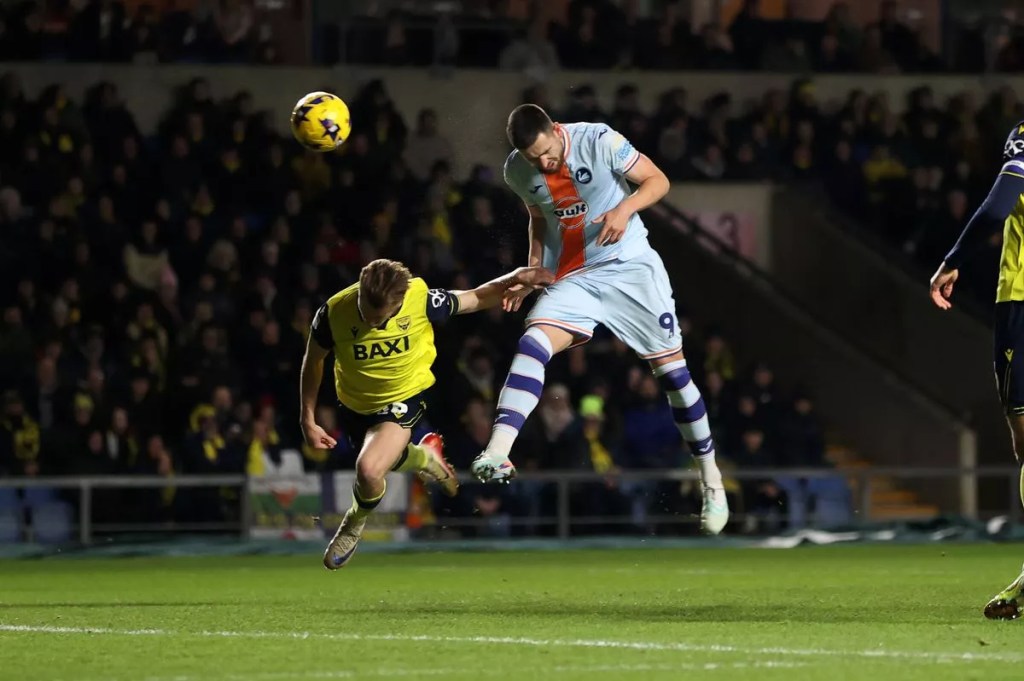
The reality, however, is different. These moments can light up games, but it’s the other bits, the stuff that ends on the cutting room floor, that defines a player. There was a point last night against Swansea where Brodie Spencer misjudged a header. It shot high into the sky and he had no choice but to head it upwards again. With no help, the second header dropped to a Swansea player who killed the ball dead at his feet, there was no bounce, no spin, no roll. It was completely under his control; he passed it to a colleague who took a touch and moved it on.
If we were to compare the unremarkable bits of last night we’d see the difference between the two sides. Swansea controlling the ball in an instant, playing simple balls, and us, constantly chasing, over-reaching, and slightly off-balance. De Keersmaecker spent half the night trying to bring the ball under control when it bounced at shoulder height. The problem was all over the pitch, countless passes went astray, many simply rolled off the field. Only Tyler Goodrham showed a quality on the ball, but like De Keermaecker, he spends half his time chasing loose balls.
But, why such a contrast from Boxing Day? Why can we play well against the better sides and be so poor against the weaker ones?
We’ve become a team of moments, if you cut together the best bits of this season, it would produce a decent showreel. Cameron Brannagan’s free-kicks, Shemmy Placheta’s goal at Bristol City, Brodie Spencer’s bicycle kick clearance in the same game, Stan Mills’ winner or Jamie Cumming’s save on Boxing Day. These are memorable moments, which wipe clean the inadequacies and missed opportunities.
Against Southampton we had enough of those moments to make it worthwhile, but there was times where we could have conceded, times when the quality of our possession fell short, on another day, like last night, Stan Mills pulls up with cramp and isn’t there to score the winner. But, it wasn’t like that, it was good.
More broadly, we’ve become a club of moments; our thoughts are consumed by whether we’re above or below the relegation line, we appointed a manager who largely dismissed talk about our new stadium because he knew he wouldn’t be in position when it was built. We’re suffering because of our short-termism.
Of course, we need these moments, we needed to be above the relegation zone to survive, we needed Gary Rowett’s savvy interventions to do that, but it’s a habit we need to break. We can’t keep appointing a short-term manager whose sole purpose is to save us from relegation, we don’t need signings to fill gaps until the summer, we don’t need to be fixated about which division we’ll be in next season.
What Swansea showed is that despite them apparently being one of the weaker sides in the division, they are a long way from being genuinely relegation threatened. They have a DNA built up over years which means even when they’re poor, they’re competitive. It might not be possible to create those barnstorming moments every game so you need to be able to fall back on good quality possession, accurate passing and disciplined defending. We’ve shown moments of that this season, but it’s forced, rather than natural.
We need to build and evolve the squad, maturing it over time, bringing in quality that can create that DNA layer by layer. With it, we need a manager who sees us as a two or three-year project, whichever division we’re in, and not a short-term contract.
One thing for certain is that next season we’ll either be in the Championship or League One. Whichever we end up in, the objective will be the same, to improve on what we are this season. As such, relegation or otherwise is not relevant, a culture of continuous improvement is. Until we get to a point, where things we currently reach for become natural, we will always be stretching to achieve our goals.

 Oxblogger
Leave a comment