The week unwrapped
The good times returned on Friday with an edifying reminder that all this football stuff is worth it after all. Goals from Mark Harris and a superb flowing counter-attack completed by Shemmy Placheta brought us a 2-1 win over Ipswich, who were hoping to go second.
Happy days, then, all our problems are solved. Except, equally, maybe not. There are many twists and turns to go, but we’re now 20th with 18 points, which means we’re one ahead of where we were this time last year. We’ve improved on the equivalent result on 5 occasions (as opposed to just 2 where we’ve returned a lower points total). And, last season, at this point two of the three relegated sides in the division had less points.
So, while ‘stability’ is going to be measured in months and years, we have a platform for survival and should end up at the half-way stage of this season in a better position than we were last year.
Swanfacts
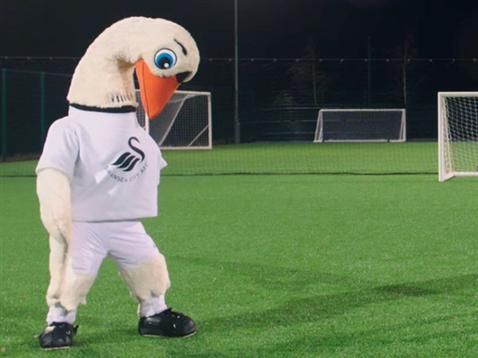
Who’s been a naughty boy? Whose got themselves into a deep crisis? Swansea City have the style of the Premier League and the results of League One. They’ve got themselves in a proper pickle with one point in six games, including conceding a two-goal lead to lose to West Brom on Saturday.
What’s more, they’ve already pulled the usual crisis parachute chord by sacking their previous manager, Alan Sheehan. In his place, they’ve appointed the Portuguese Vitor Matos, a man who has managed fourteen (FOURTEEN!) games and won six (SIX!), in his entire four (FOUR!) month (MONTH!) managerial career. To put that into perspective, his total career is just six more games than Gary Waddock managed at Oxford in 2013.
Although only a point behind Oxford in 19th, this feels like the kind of swan that won’t break your arm and an opportunity for us to get up in their beak.
Football friend | Joey Beauchamp

You’ll probably know Joey Beauchamp, right? The former West Ham winger?
Of course you do, Beauchamp was a player who defied words, and we certainly don’t have the time or ability to fashion anything appropriate here. So, let’s focus in on an appropriate, but largely forgotten period of his career, his loan spell at Swansea City.
Beauchamp made his Oxford debut in 1989 while remaining on the margins of the first team for a couple of years. At the end of October 1991, Swansea City manager Frank Burrows swooped in to take him on loan.
Swansea were struggling, second from bottom of Division 3 having failed to score a single goal away from home. Relegation seemed inevitable, Brian Horton insisted that the temporary move was necessary because Beauchamp needed first team football.
Beauchamp’s debut was at Wigan the following day, but despite a solid start, the Swans went down 1-0 leaving them second from bottom. It didn’t take long for the teenager to make an impression, four days later, on his home debut at The Vetch, he went close early on before scoring Swansea’s second from close range – his first senior goal – seven minutes from half-time in a frantic 2-2 draw against Leyton Orient.
The goal wasn’t just a landmark moment for Beauchamp. Hours later, Oxford United’s history took a dramatic twist, when owner Robert Maxwell fell off his boat and drowned, plunging Oxford into turmoil.
With pressure on Frank Burrows growing back at Swansea, they welcomed Bournemouth on the following Friday. Beauchamp was a constant threat as The Swans swarmed all over the visitors running out 3-1 winners.
Beauchamp was unavailable for their FA Cup derby win against deadly rivals Cardiff, but the 2-1 win gave a sense that their fortunes were beginning to turn. He returned three days later, as did Cardiff, for a 0-0 draw in the Autoglass Trophy.
The following Saturday, Swansea returned to league action with a visit to Bradford City. Having not scored on the road since April, Swansea broke their duck after seventeen minutes. Beauchamp grabbed the second three minutes later. Eight minutes before half-time, it was three, Bradford hit back within three minutes but Swansea put themselves in charge with a fourth two minutes before the break.
4-1 up at half-time, there was no let up in the second half, two goals apiece in the first fifteen minutes brought the score to 6-3. At this point everyone calmed down with Bradford adding one more for luck with twenty minutes to go; it was a bizarre and cathartic day.
Despite Frank Burrows pleading with Brian Horton to keep Beauchamp, his last game came in a 3-2 defeat at Brentford, despite the Swans taking a two-goal lead.
The return of three wins, two draws and two defeats proved enough to kick-start Swansea’s season as they finished 19th, five points clear of relegation. Beauchamp returned to The Manor fighting his way back into the beleaguered first team, scoring eight goals, including two against Swindon and playing a key role in their miraculous last day survival at Tranmere. The rest, as they say, is history.
From the archive | Oxford United 3 Swansea City 2
The day we were promoted back to the Conference in 2010, there were a number of fan interviews which alluded to us rocketing straight through League Two and into League One. By 2014 that kind of ambition had stalled, the owners were tired of funding stability and Chris Wilder had reversed his truck down the division to Northampton to navigate a different path towards his ambitions to manage in the top flight.
2014 was a frustrating summer that exploded in an instant when it was announced that the club had been sold to Darryl Eales. He installed Mark Ashton in as managing director and, almost as a footnote, appointed Michael Appleton as Head of Coach. Both Ashton and Appleton arrived with considerable baggage.
The suspicions of many fans seemed bare out as Appleton struggled to find rhythm or form in his first season. After struggling in the first half of 2014/15, results started to improve and we finished the season in mid-table.
The summer of 2015 was no less spectacular, the club blossomed. Appleton secured the signatures of young Premier League hopefuls looking for a new way into the big time. The impact was immediate, by January 2016 Oxford were 3rd in the division and drawn to face Premier League Swansea City in the FA Cup.
Before the game, all around the Kassam there was a sense of calm and confidence which was uncharacteristic after years of struggle and decline. Swansea, in contrast, were struggling in the Premier League, but appeared to weather the storm when Jefferson Montero got on the end of a slick move after 23 minutes to put them 1-0 up.
Oxford fought back and equalised on half-time with a penalty from Liam Sercombe after Alex MacDonald was fouled. They took the lead four minutes into the second half when Kemar Roofe uneashed a wicked bouncing strike beyond the keeper for 2-1. On the hour, Swansea were awarded a corner, George Baldock cleared and released Chris Maguire. Suddenly Kemar Roofe was racing free with just the keeper to beat. Maguire squared the ball, Roofe’s shot clipped the top of the keepers body and the ball arced high into the air. As it rose, a sense of peace and anticipation seemed to consume the stadium. It dropped under the crossbar and into the net. The Kassam exploded at the moment of purity and perfection, not unlike that other moment of catharsis; Alfie Potter’s fabled winner at Wembley in 2010.
A Swansea second made for a tense final few minutes, but Oxford had claimed a famous scalp and their first top flight giantkilling for fifteen years in the FA Cup. But more than this, it announced Appleton’s revolution to the nation and the birth of the modern club.
 Oxblogger
Leave a comment