The week unwrapped
Stan Mills’ goal and Saturday’s 1-0 win over Derby County has put a spring in everyone’s step as we enter a period of the season that has a different mode and cadence. The mode is a period of games where we hope to accumulate points to build a buffer between us and the relegation zone. The cadence is how quickly games are coming at us; it’s a test of endurance as much as a test of skill.
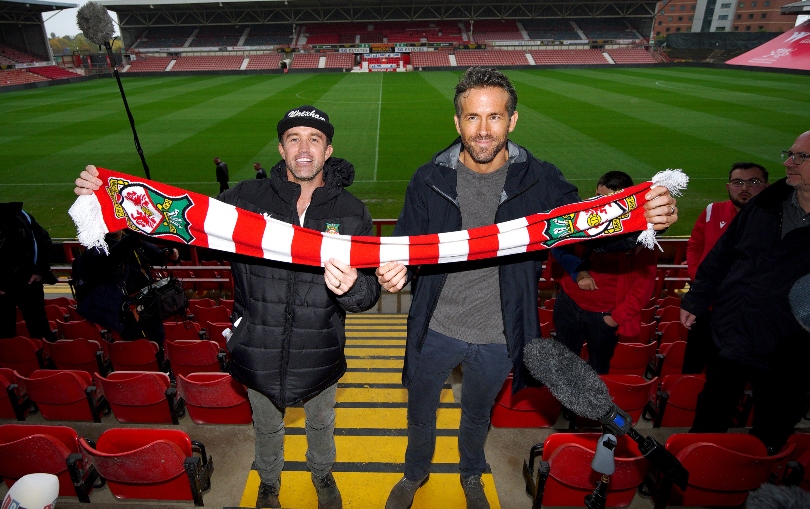
After a bit of a reshuffle, including the return of The Night Hawk Ciaron Brown, has Gary Rowett conjured up RowettBall 2.0? We’ll know more on Wednesday against Wrexham-off-the-Telly, a club whose fans spend half their time shouting ‘COME ON’ into GoPros and the other half running start-up avocado farms just outside Coedpoeth. Despite their worldwide fame and unprecedented rise through the divisions, things have been a little trickier this season so a point, or more, should be within our grasp.
Wrexfacts
Wrexham are at an interesting crossroads. Having been styled in their documentary as a plucky downbeat community club dragging itself out of the gutter through spirit alone, it now faces something of a different challenge going into their first Championship season for over 20 years.
They’ve jettisoned their cosy Conference winning side and much of their League One promotion squad to replace them with players from Championship Central Casting. As a piece of drama, they’ve killed off their main characters. It makes you wonder if the audiences that were attracted to the original Wrexham story will be quite so enamoured by a tale of rich people spending millions for a solid mid-table finish. Equally, it’s not a fairy story to drag yourself up by your bootstraps and fail. They can’t win either way.
The effect of their spending has been underwhelming with some fairly average results; they’re currently 18th, just above Oxford, with two wins and ten points. One barrier to more success may be the one stalwart from the Conference days that remains; manager Phil Parkinson. Will he start to look out of place if the struggles continue? If they under-estimate us, Wednesday could be telling.
Football friend | Jefferson Louis

Jefferson Louis was not a normal footballer, in fact, he may have been less a footballer more an inverted Dr Who. Where the good doctor was one person represented by many people, Jefferson Louis was many people represented by one person.
The story of Louis is well known, he was in prison in 2001 for dangerous driving while disqualified, after which he joined Oxford in 2002. There wasn’t much fun around the club, so his joyous lumbering gate endeared him to fans almost before he made his debut. The hope was that we’d somehow beaten the market to unearth a raw new talent.
In two years, he played 55 times scoring 7 goals including, most famously, one against Swindon in the FA Cup which resulted in him dancing naked live on TV after we’d drew Arsenal in the 3rd round. He also enjoyed the glory of converting the winning penalty when we put Premier League Charlton to the sword in the League Cup.
He left in 2004 following a patchy and eventful period in which he was once substituted in the first-half of a game against Carlisle because he simply couldn’t be arsed. From there, he joined Wrexham (via Woking, Bristol Rovers, Hemel Hempstead Town, Lewes, Worthing, Stevenage Borough, Eastleigh, Yeading, Havant and Waterlooville, Weymouth, Maidenhead and Mansfield).
Louis was signed by Brian Little in 2008 when Wrexham were relegated from the Football League after years of mismanagement. He scored on his debut in a 5-0 win over Stevenage Borough on the opening day of the season and by the middle of September was The Conference top scorer with seven goals (by comparison, the whole Oxford team had scored 10).
Louis’ polished media persona was on show again when he interviewed pitchside after being substituted in the closing stages of Wrexham’s 2-0 win over Oxford live on TV. His response to Setanta presenter Rebecca Low’s question about why he’d asked to be taken off was ‘I was a bit fucked.’
As many relegated clubs find, the Conference was tougher than expected and Little’s long ball game – of which Louis was integral – did little to endear him to fans. After a patchy start Little was replaced in September 2008 just two hours before Wrexham’s draw with Torquay and replaced by Dean Saunders.
Saunders steered his side to five wins in his first five games, the best start for a manager in Wrexham’s history. Emboldened by his start, Saunders implemented Saundersball, signing eleven new players in his first three months. Never someone who lacked confidence in his own abilities, he styled himself as a visionary with a golden touch. Louis was too agricultural for Saunders’ taste despite a partnership with Marc Williams that plundering 21 goals by Christmas. Even so, the writing was on the wall and by the end of the season Louis was struggling to make the bench.
Wrexham’s promotion charge stumbled leaving them tenth in the division at the end of the season. They announced losses of £1m having bet the farm on an instant return to the Football League. Saunders needed to trim his squad, cancelling Louis’ £1400 a week contract.
Louis lasted until November 2009 at Crawley Town after he told Steve Evans where he was going wrong tactically after one game; Evans punished the whole squad by having them in for training at 7am the next morning. He moved to Rushden first on loan then permanently, but cut a disinterested figure in our play-off semi-final win in 2010.
After such tumult, he settled down to enjoy a quiet footballing existence at Gainsborough Trinity, Darlington, Weymouth, Hayes & Yeading United, Maidenhead United, Brackley Town, Lincoln City, Newport County, Whitehawk, Brackley Town, Hendon, Margate, Lowestoft Town, Wealdstone, Staines Town, Oxford City, Banbury United, Chesham United, Farnborough, Chesham United, Hampton & Richmond Borough, St Albans City, Beaconsfield Town, North Leigh, Risborough Rangers, Thame United, Slough Town, Beaconsfield Town and Thame United before retiring prematurely in 2025 after just 903 games and 293 goals to become Slough Town’s Assistant First Team Coach.
From the archive | Oxford United 1 Wrexham 0 (2009)
Alfie Potter’s goal in the Conference Play-Off Final in 2010 didn’t start with a headed clearance by Reece Day on the edge of the York City penalty box, it started more than a year before.
Oxford and Wrexham were arguably the biggest clubs in the Conference in 2009; big clubs with brittle egos. When we were relegated in 2006, we were told that there was a ‘wrong to be righted’, it turned out not to be wrong at all; we deserved to be where we were. Wrexham, relegated in 2008, were much the same.
At the start of the 2008/9 season, Wrexham were a goal machine, but their attacking flare didn’t translate into points. Oxford’s start was even worse. Both fired their managers – Dean Saunders replaced Brian Little while Chris Wilder took over from Darren Patterson.
It was the appointment of Wilder that changed everything at the Kassam. He instilled a sense of grit, injustice and organisation that had been absent for too long. The effect was instant, after a defeat by Salisbury in his first game, and a broken leg for Sam Deering, the team’s form picked up. Three weeks later it was announced that we’d been deducted five points for fielding an ineligible player. Eddie Hutchinson had been with the club for two years, but hadn’t been registered at the start of the season as he was surplus to requirements. When Hutchinson worked his way back into the side, nobody thought to check the paperwork. An obvious error, but a brutal punishment none-the-less.
If anything, it propelled Oxford more, by the time Wrexham arrived in April, Wilder’s side had won 13, drawn 4 and lost 1. Despite everything, the play-offs were within reach. But, with the points deduction acting as ballast to our charge, there was no room for error.
The game was attritional, James Constable, with 24 goals in his first season, was rampant with the Wrexham defence literally ripping his shirt off trying to stop him.
The game moved into injury time still goalless, a result which would have ended the play-off hopes for both sides. The ball was worked out to Craig Nelthorpe, a scrappy winger with a pleasingly nasty streak. The crowd urged Nelthorpe forward, as he found space down the right win, at the other end Billy Turley theatrically threw himself to the floor in despair. The dream was crumbling; the time was now.
Nelthorpe launched one last desperate cross, James Constable, eight yards out, directed the ball towards the goal. It clipped the underside of the bar and dropped, half the stadium didn’t know if it had gone in. There was an eery silence until Adam Murray sprinted away with his arms in the air with the Wrexham keeper throwing the ball at him in frustration as he wheeled away. In that moment, the run was saved.
Despite the goal, the points deduction left us just short at the end of the season, but the run renewed a spirit in the club to strive for promotion the following season. Wrexham by contrast descended further into financial chaos. It would take the unlikely investment of film stars to dig their way out.
Want more?
If you’re a true glutton for punishment, then sign up to the Oxblogger Newsletter, an eclectic bimonthly online fanzine written by the fans for the fans. The October issue is out soon.
The latest Oxblogger Podcast is out, where we tackle the trickiest of subjects; the definitive team of the 1990s.
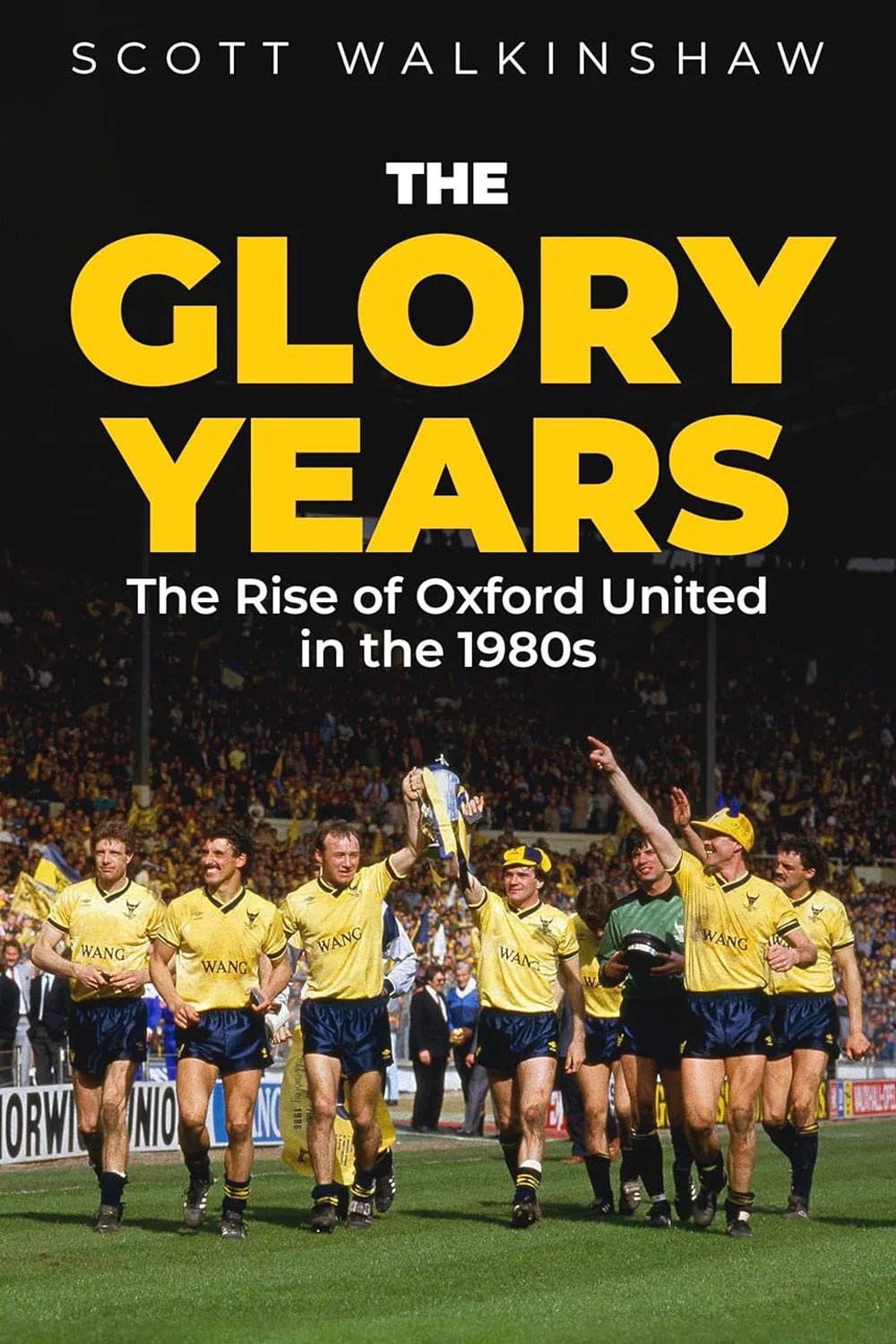
And, if you’ve really got this far and aren’t aware, this season marks the 40th anniversary of Oxford United’s first season in the top flight, The Glory Years is out now the remarkable in-depth story of our rise through the divisions during the 1980s.
 Oxblogger
Leave a comment