As soon as the stadium decision was delayed until after the start of the new season, a jarring tonal shift was always likely to occur. Let’s not forget, back in 2023, the day the council committed to negotiate with the club for The Triangle – a major landmark – we played Wycombe Wanderers, lost 2-0 and went on a seventeen game winless streak which cost Karl Robinson his job.
I’m not suggesting that’s the kind of barrel we’re staring down at the moment, but for all the triumphalism of getting planning permission, the stadium remains a conceptual idea into which we can invest whatever we choose. Reality is something different.
While the club wallowed in traffic flow pragmatism and biodiversity bloviation, it tentatively trailed the reveal of this season’s third kit. The campaign itself was a bit half-hearted, but equally, not dissimilar in timing to last year’s third kit launch, which went down well.
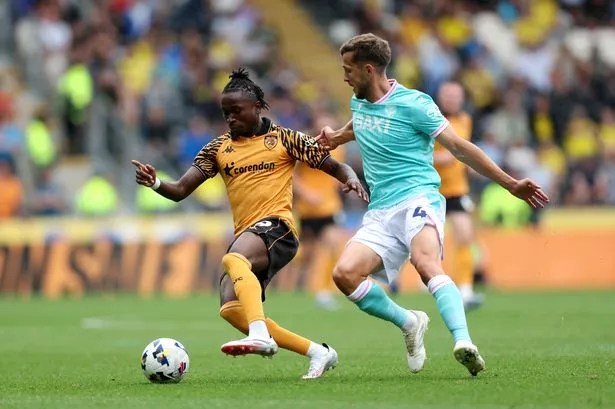
It’s hard to know whether it was always planned this way or whether the release was rushed when it became obvious that we couldn’t wear our available kits for the visit to Hull.
This year there was the added problem of where to fit the launch into the promotional schedule – there were two other kits, signings, tickets and friendlies to promote over the summer along with the Indonesian tour. Plus, it was hard to get the positioning right in the middle of the planning decision, when we were supposed to be serious grown ups rather than fancy t-shirt hawkers.
The need to launch three new kits every year places a heavy burden on the marketing department. Marketing is about extracting more value out of something than its material worth; a football shirt’s value is at least five times its manufacturing cost so it’s not possible to simply release something because it has a nice combination of colours. It has to be inspired by something or part of a conceptual whole which is bigger than all of us.
Kit launches are easier during the summer when everything is about potential; you can apply any message you choose and fans will consume it. Releasing it five minutes before all that ethereal conceptual stuff collides with the heavy reality of an away game in Hull was always a risk.
The shirt was eventually revealed as the players walked onto the pitch and into the sun blessed Humberside reality. After much rumour, it turned out to be the colour of what would happen to a Labubu doll if you put it through a bacon slicer.
The turquoise claims to draw ‘inspiration from the oxidised copper that adorns the iconic spires of Oxford’. It has a pink trim that ‘reimagines one of the most infamous events in our Club’s history’ without explaining what that infamous moment is (we suspect it’s when the Ox statue was vandalised in 2011).
Fair enough, if you’ve got to have a third kit, you might as well make it different. Hopefully the unusual colour way will appeal to different segments of the fans (physicists and art pranksters, mostly).
But, revealing it as you walk onto the pitch is like holding a match to its synthetic fibres. All the bright, different, bold conceptual nonsense was torched immediately as Hull cut through our midfield, who were socially distancing like it was 2020. The move allowed Joe Gedhardt to push Elliott Moore back like he was held in a tractor beam. As soon as Gedhardt reached the box he fired through Jamie Cumming for 1-0. We’d played less than two minutes and we just seemed to want to lie back and think of oxidised copper.
It could have been two before Will Lankshear latched onto Tyler Goodrham’s knock-back to equalise unexpectedly seven minutes later. But although that offered an opportunity to reset, a swift passing movement cut through the Oxford defence again to make it 2-1 via Matt Crooks. Madness.
Reverting to the uber-realist strategy which dug us out of last year’s problems; a long throw from Will Vaulks was then launched into the box for Elliott Moore to flick on, allowing Cameron Brannagan to drive in. 2-2 and we’d played less than half-an-hour. It was, indeed, bold and different, but probably not how the marketing folks envisaged it.
The second half settled into something more familiar; we absorbed pressure, rode our luck and even fashioned the odd chance. As we eased into injury time, most people would have taken the scrappy point. Then, four minutes into injury time, Ollie McBurnie latched onto another slick passing move to take the points.
And with that we were confronted with the grim reality of two consecutive league defeats. Although narrow in margin, many will say the performances suggest a wider gulf than the scores suggest. Despite this, it’s not time to hit the panic button; there are eight teams without a win, six without a point. We’ve barely got started. Some of may need to get used to life at the bottom; Sheffield Wednesday, Derby, Wrexham, maybe Blackburn. As much as we want to believe otherwise, we are definitely part of that cohort.
All is not lost; our key players haven’t had a chance to reset properly and our new faces have yet to feature. While Lankshear looks like he’ll help with our striking problems, we’re still without De Keersmaecker and Prelec while last year’s bedrock of Brown, Vaulks and Brannagan are all carrying injuries. For all our statements of renewal, the symbolism of new kits and the long term optimism that comes with the stadium approval, back in the real world, we’re a continuation of where we left off last year.
I suspect these realities are less of a surprise to the management and team, they haven’t had a gap in which to fill their heads with unachievable dreams. In the stands, it’s time to deflate our expectations a little to meet our current reality, we will be a better club and better fans when our expectations are more measured.
 Oxblogger
Leave a comment