Our world is full of tumult right now, but I have an emerging theory. I think everyone knows that Donald Trump is completely woo woo. He’s your cantankerous uncle sitting in the corner of a family party; you know he’s probably going to say awful things, but rather than challenge him, you give him another sausage roll and try to move on.
Trump has a limited vocabulary, a short attention span and appears to be operate entirely instinctively. Some of the things he said this week look bad on paper, but in context, they sound like the rantings of a simpleton rather than a pre-planned, targeted evisceration of international relations.
When he said Ukraine started the war with Russia, I don’t think he even set out to say that when he started his sentence. He has a vocal tick in his speech which requires him to say sentences in two parts – set up and punchline. He started by saying Ukraine could have stopped the war (by somehow doing a deal), because of the tick he needed to find a punchline. This came out as ‘they shouldn’t have started it’. I think he meant they should have just struck a deal and not engaged in any fighting. The idea of a deal was a vague concept, there wasn’t one to be had; like your cantankerous uncle telling you that the world’s problems can be sorted out by knocking people’s heads together or using common sense, it’s meaningless and over-simplified.
But, I think those around him know this.
You can see the parallel world in some of the actions of US diplomats who subtlety contradicted their President. It’s also, I think, what Boris Johnson meant by saying we shouldn’t be scandalised by him (code for, ignore him, he’s your cantankerous uncle). Even the Russians were quick to manage expectations following talks in Saudi Arabia this week.
As was pointed out, despite everything Trump said this week, US policy hasn’t changed in Ukraine, they’re still delivering the finances and military hardware the country needs. I suspect there’ll be lots of noise from Trump himself, but realities on the ground will move more slowly because of what’s happening away from his lectern.
We live in these multiverses all the time; they don’t make our lives easier but it’s helpful to know they exist.
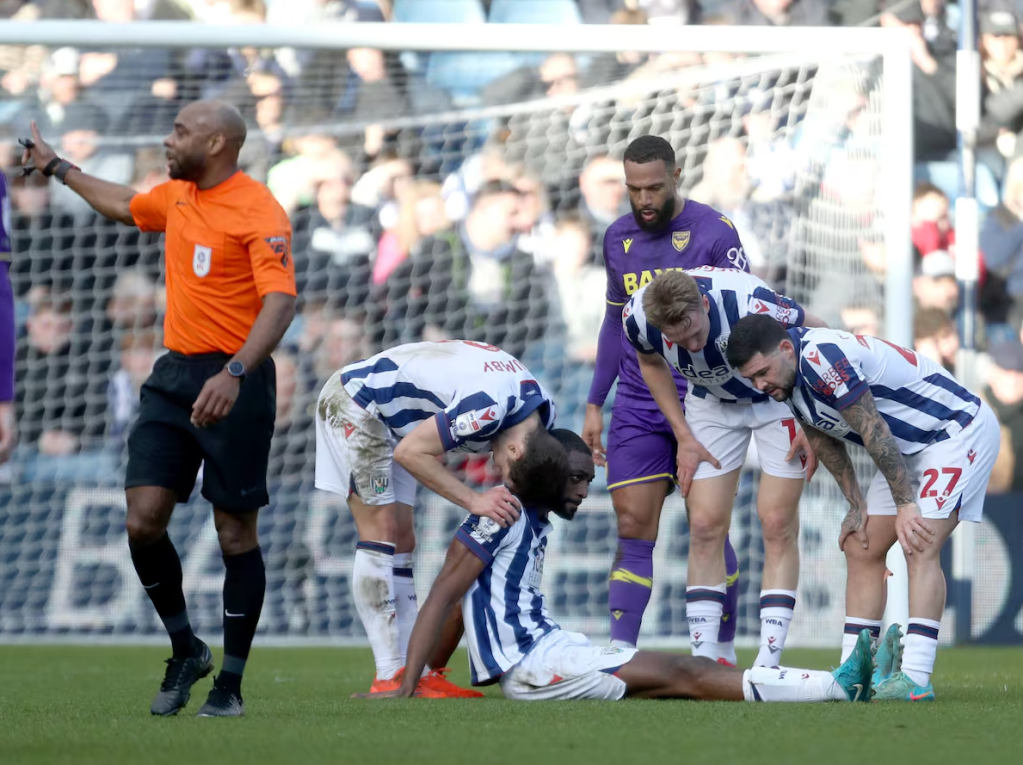
Take the game against West Brom yesterday, on the face of it we were impotent, devoid of chances, and generally outplayed. But equally, we were in the game deep into injury time and only conceded a second when we were stretched. More broadly, we dropped two places to 18th but the points gap to the relegation zone remained unchanged.
Even Gary Rowett’s interview operated on two levels; he said he’d like us to be braver, sharper in front of goal, more creative, but he didn’t present as a manager who really believed that was possible. He even suggested that a few of his selections were to give players a run-out. It’s a weird old world where you’re using league games against aspirant Premier League teams in the same way you would the EFL Trophy.
Although it’s easy, and entirely accurate, to say that the result was predictable, worrying and didn’t really do any damage, it’s also clear we currently have a problem creating chances and scoring goals.
There’s been a lot of talk this week about Joey Beauchamp, marking the anniversary of his death. Like most players, Beauchamp’s career, has become a supercut of his best bits. But he wasn’t always consistent, he’d drift out of games, occasionally get dropped and sometimes lose form.
This seems to be a characteristic of wingers, which is likely down to the need for explosive speed and the psychological pressures of delivering consistently. Even the great players of the past struggled for this. Beauchamp was offset by Paul Simpson, Mark Angel, Chris Allen and Stuart Massey amongst others. He delivered more than most, but we were reliant on at least one of those players being in-form to give us a creative spark.
It’s like being a baseball pitcher. On the face of it, it’s not a gruelling physical test to stand on a mound of mud and throwing a ball, but a typical Major League Baseball player can pitch around 100 times before they need a week of rest. Teams rotate their pitchers to allow time for recovery.
It’s much the same with wingers, Gary Rowett’s arrival coincided with Shemmy Placheta coming into form. That’s now started to drift away, but none of our other options have stepped into his place. Siriki Dembele continues to search for an end-product, Tyler Goodrham’s rhythm has been disrupted by his sending off against Exeter and, perhaps, the birth of his child, Stan Mills has started to show form but lacks fitness to carry the team completely.
With none of those players firing, it’s no wonder Mark Harris – not the most clinical forward at the best of times – looks out of sorts. Even Matt Phillips, who looks like he’s fallen off that cliff edge ageing forwards sometimes do, has some excuse when those with the legs aren’t performing.
While this is not easy to resolve, it’s also not a deep tactical problem. We’re solid enough elsewhere, and while we have lacked a bit of urgency in recent weeks, there’s no need for major surgery.
Back to the multiverse, for all the talk about what’s going wrong and what we should do about it, I think Gary Rowett is fully aware of the worlds he occupies. On the face of it, The Championship is Donald Trump; predictably unpredictable, you know it’s going to give you a battering from time to time, you know it’s frustrating and unfair. But, in parallel, the reason Rowett is successful at this level is that he knows in this unforgiving environment, you dig in, stay calm and keep tweaking until something starts to work.
A story: back in 1996, we managed to go six games without scoring, we had Moody, Beauchamp, Jemson and others, but couldn’t buy a goal. We played Stoke City, who were seventh at the time, so it felt like we’d never score again.
Early in the first half Joey Beauchamp crossed into the back post, Nigel Jemson knocked the ball back and who arrived to nod the ball home? Martin Gray. Gary had never scored before and was famous for playing the game sideways. Salvage had come from the most unexpected place. The goal broke the duck and we went on to win 4-1. We then went on a run of five consecutive wins scoring 13 goals. It’s a lesson that these things do pass, and, perhaps, that we should expect a Peter Kioso hat-trick next Saturday.

 Oxblogger
Leave a comment