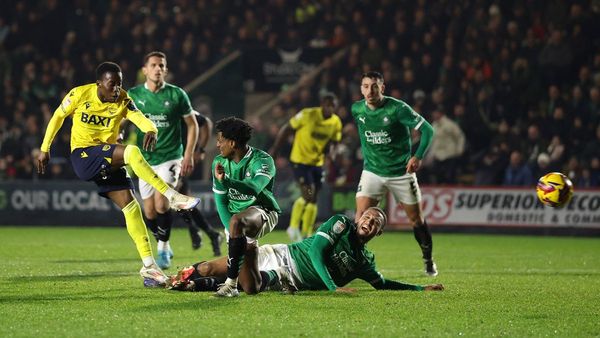
I watched the game against Plymouth through a fog of flu-type symptoms. It’s a strange variant this year; physically it seems to be fairly mild but as soon as you try to do anything you find you have no energy.
A normal dose of flu compels you to your bed and you’re left to fester until the virus is contained. With this, I’ve been able to get up and generally behave normally right up to the point where I’ve tried to do something when I find I’ve no reserves to draw on.
It’s quite clever in a sense because it draws you into a false sense that you’re either fine or getting better. I went into a shop thinking I was OK, but came out feeling exhausted having infected everyone around me. If illness is nature’s way of managing the population, presumably we’re only a few mutations away from a variant of the flu which is entirely undetectable, apart from an overwhelming compulsion to cross a six lane motorway with a blindfold on.
At first, I tried to manage around the virus, doing things which I thought were within my limited capabilities, but after a morning completing the grand task of sending two emails I decided I just needed to declutter my thinking, keep it simple, focus on getting better and do nothing. Even when I saw emails or messages coming in, I decided I needed just one priority, everything else would have to wait.
De-cluttered thinking is probably the biggest benefit of us having a new manager. When you’re established and struggling, you can point to a multitude of reasons why things aren’t going your way. Des Buckingham, quite reasonably, pointed to the lack of pace he had on the wings when things were going pear shaped. Even Karl Robinson claimed he knew how to get us out of a 17 game winless hole; he just needed a significant proportion of the previous seven years to have happened differently.
Some new managers come in and lambast what they’ve found – squad fitness or a general lack of professionalism are two favourites. In most cases, this is safe ground, if the previous manager’s left under a cloud, any criticism justifies the fans’ vitriol.
Gary Rowett has avoided this, I don’t think he’s even used Des Buckingham’s name, let alone tried to lay any blame on his shoulders. This has helped package the Buckingham era into a time capsule completely untainted. It’s a smart move, the fans may be undecided about the decision, but at least Rowett has avoided smearing his predecessor’s name.
Instead, Rowett has focussed on the absolutely fundamental priority of accumulating points and this is what is driving all his decisions. He’s been quick to protect the staff and the players, even those who let him down against Exeter. He knows that he’ll have to work with most of them for the next few months, even if they’re not ‘his’ players.
You can see it on the pitch as well, although he’s been drawn into conversations about tactics (specifically formations, which is what everyone focuses on as though it’s the only dimension to consider) – but, he’s not being sucked into any kind of ideology beyond one which will get you points.
It’s probably the most refreshing element of his arrival, ever since the influence of the City Football Group arrived at the Kassam under Liam Manning and then Des Buckingham we’ve been prone to let games slip away because they didn’t suit the foundation stones of the philosophy we’re built on. For long periods we played out the back in the most laborious way possible or we’ve relied on pace which rendered us impotent when those attributes weren’t available.
This isn’t a criticism of Des Buckingham, his approach was iterative and developmental whereas the owner’s thinking has evidently become more immediate. To make progress, Buckingham would always have needed time, but then he found in Josh Murphy, a Championship winger with Premier League pace, gathering dust in a cupboard and he was catapulted into another realm of expectation. In truth, Buckingham would probably still be in a job if we hadn’t been promoted.
Nobody expected to be mid-table during September, so our autumn collapse could have been easily explained as a natural readjustment. But do you just accept that or build on the opportunity presented to you? The owners chose the latter and Buckingham’s analytical coaching approach (we’ll learn from this) suddenly seemed out of step with Rowett’s less cluttered more managerial approach (we need to deal with this).
Will Vaulks has probably been the most notable transformation under Rowett. Vaulks was signed as a ‘good bloke’ and an experienced Championship player. He offered stability as we started the ascent into our new division. I imagine he and Buckingham got on well as they were both good people, but he was also being asked to do things which were ideologically sound but practically beyond him. He became a single point of failure. More than once he buckled under the pressure and was notably at fault for us losing points.
Vaulks is Rowett in player-form. In all likelihood he will never play above the Championship, but he accepts this and applies himself accordingly. Rowett’s focus has been on dealing with the here and now, playing to the strengths of his resources rather than lamenting deficiencies.
The lingering image of the draw with Plymouth was Vaulks’ aerial assault on the home team’s penalty box from throw-ins. It was like the bombing of Dresden. We’d seen him sling a few in before, notably for Dane Scarlett’s equaliser against West Brom, but never as frequent as this and never to the extent where they were landing at the far post.
The commentator, Simon Watts, asked rhetorically whether this was a legitimate way to play a modern game all about refined control. As an Oxford fan, I think the point he was trying to draw out was not so much sniffy dismissal of the approach, more that as much as it’s considered poor practice, it was working.
Vaulks became part of the solution because Rowett has given him a role which plays to his strengths, even his spectacular drive for the goal was anti-modern football – spanking the ball from 25 yards when you haven’t found the net in two years does not conjure up a sizeable xG, I suspect.
This is football in the Bauhaus tradition – of function over form – but there’s a strange beauty in it, a refreshing sense of purpose, a sense of doing rather than thinking. It might feel like a backward step, but it’s given us a forward momentum.
While you’re here…
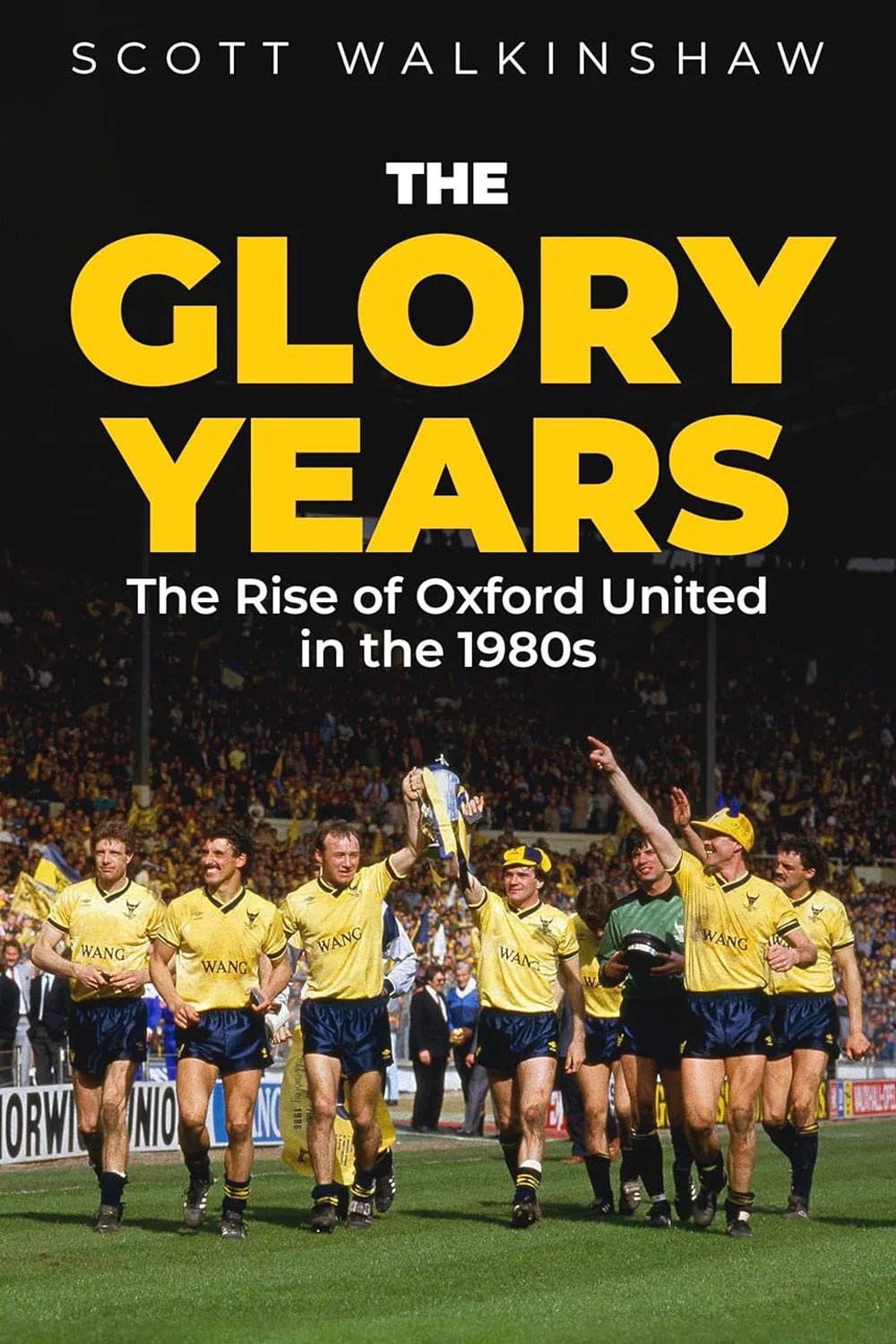
The Glory Years is published on the 27th January and now available for pre-sale here. It is the remarkable story of Oxford United’s rise through the divisions from near bankruptcy to winning at Wembley.

 Oxblogger
Leave a comment