Promotion to the Championship has ushered in a new era of pragmatism. Where most of us went into the new season hoping to stay up, the appointment of Gary Rowett has sharpened the resolve that staying in the division is no longer a hope but an objective. We thought we were on an adventure, but it turns out we’re in a strategy.
What has emerged is a defining theme since promotion.
The Championship has shown us the very different models operating across football; there are the dreamers like our post-promotion selves, the pragmatists operating within a solid but limited framework and then there are the money machines suckling off the riches of the Premier League.
Since the removal of Des Buckingham, the theme that has emerged is more about who do we really want to be?
Jonny Biscuits lays out the arguments around this beautifully in the third issue of the Oxblogger Newsletter, so I won’t re-hash them here. The club has been clear about its aim to establish itself in the Championship, although less clear about whether that’s intended as a platform for a shot at the big money. Gary Rowett’s appointment certainly feels like a relatively short to mid-term appointment before we move to the next stage, which, looking around the division, seems to be the hiring of a bearded mid-table Bundesliga coach.
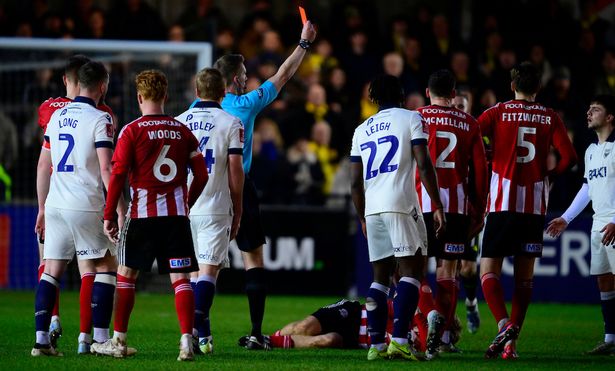
The FA Cup tie against Exeter was another articulation of this almost emotionless ambition. Admittedly, the draw didn’t stir the loins given we’ve played Exeter many times before in recent years, but a win would have raised the prospect of drawing a big club, visiting one of the great stadiums or filling the Kassam. Hell, it may even have brought about a giant killing although that seem a bit old fashioned; smaller clubs play bigger clubs for ‘experience’, ‘tests’ and ‘paydays’ rather than victories these days.
The pragmatists will argue that the Championship already offers full stadiums and visits to big grounds, which is fair enough; as a result nobody can reasonably argue that on balance, the priority is to stay in the division.
But equally, to sacrifice the FA Cup is to strip away another layer of significance. If football’s appeal is anything, it’s that success and failure means something. Even those at the top of the game have ploughed billions into it because it has a broader resonance. And yet, weirdly, the establishment seem hell bent on stripping any meaning from every nook and cranny that football offers.
The FA Cup means something because of its lineage going back 153 years. It is laden with social history, iconic moments and stories that give us some semblance of purpose in our otherwise meaningless existences. If you can add to its history by winning the cup or beating a bigger side, you become part of that wider story, larger than the sum of your parts, you become immortal.
And yet, over the last twenty years or so, we’ve entered an age of hyper-rationalisation and the FA Cup has been sacrificed along the way. Fielding weakened sides was the start, then playing semi-finals at Wembley, then playing ties in midweek, then removing replays. We all kowtow to Pep Guardiola’s genius and his belief that the occasional replay will exhaust his poor players. This is notwithstanding that Manchester City are so heavily resourced they haven’t required a replay for nearly 10 years or that their squad depth is such that they cruised past Karl Robinson’s Salford 8-0 with a hat-trick from a player with the number 87 on his back.
What is frustrating is that it doesn’t need to be like this. The FA Cup final could be the English Superbowl, a national institution with global appeal which even non-fans watch. The third round could be like Boxing Day football where families take in a rare live game. This would only enhance the reputation of English football and the Premier League. It could be positioned as a way of re-establishing football’s roots (its brand) without sullying the hyperbole of league football. We’re so obsessed with modernisation, what about leaning into the tradition? What about playing every game at 3pm on a Saturday? What about wearing special kits which are unbranded? What about having a universal pricing scheme that allows stadiums to be full? What about making it different and using the FA Cup as the biggest marketing showcase football has to offer rather than a tedious distraction?
After the defeat to Exeter, the conversation quickly moved onto Tuesday’s game against Plymouth. The disaster, it seemed, wasn’t the result, but the loss of Tyler Goodrham due to an undeserved red card and the impact that might have on the league. Everyone quickly convinced themselves that the defeat was meaningless and perhaps even advantageous with players being rested and us avoiding extra-time or penalties. Afterwards Gary Rowett admitted that he’d considered introducing Ruben Rodrigues when things were going wrong but ultimately didn’t see the point.
What he did do, of course, was give Marselino Ferdinan his debut, no doubt sending Indonesian social media into a frenzy. I’ve no beef with giving him an opportunity, but the club’s blatant attempt at harvesting clicks and likes by lording him on Instagram afterwards, ignoring that we’d just come off the back of a humiliating defeat, stuck in the throat somewhat.
I don’t mind that we played a weakened side but there should be no excuse for being so dismissive that we sacrifice ourselves so meekly in a competition which should contribute significantly to why we take an interest in the game at all.
We’ve been giant killed and that should feel embarrassing. We shouldn’t be seeking to dismiss it so easily. The point is not that we lost, Exeter played better and deserved the win, the point is how little we choose to care. We should be angrier than this.
While you’re here…
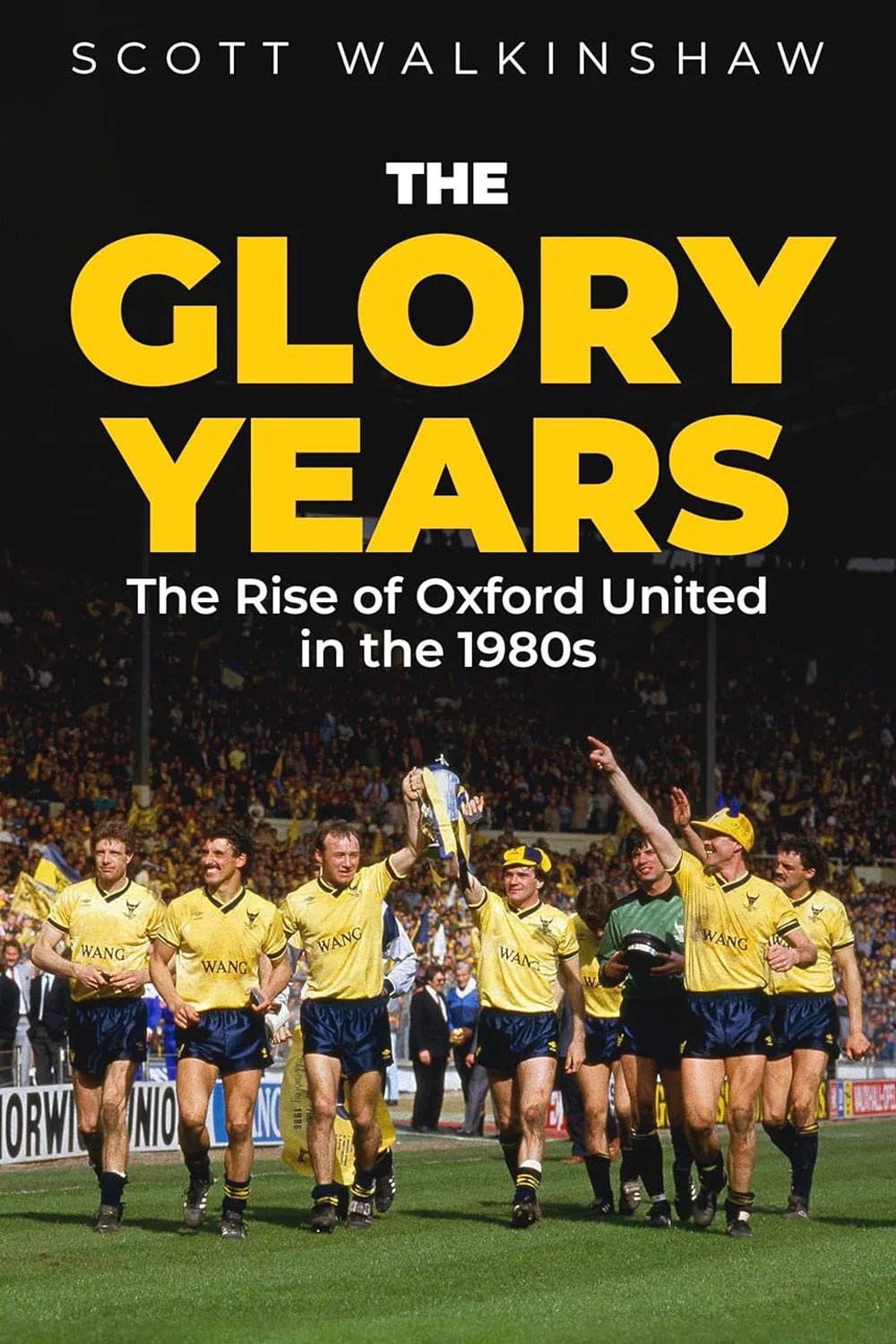
The Glory Years is published on the 27th January and now available for pre-sale here. It is the remarkable story of Oxford United’s rise through the divisions from near bankruptcy to winning at Wembley.

 Oxblogger
Leave a comment