There’s a giant scoreboard in the corner of Adams Park like the one that dominates the fence end of the Kassam. One retina burning advert is for local waste disposal company Biffa, which is simply the logo on a red baackground and then a slide with the strapline ‘Use Less, Do More’.
I don’t know if this is a deliberate brand collab with Wycombe Wanderers, but it could easily be a mantra adopted by the post-Ainsworth Chairboys.
I like Adams Park, it reminds me of The Manor, it’s a curmudgeonly old man being lovably inconvenient. It’s not going to change, and it doesn’t want to. The Ainsworth years brought a mini-golden age, his strange, divorced dad at a PTA disco energy with his tight jeans and Cuban heels afforded them media interest and an ill-deserved season in the Championship.
But in a world which insists that all the gains are at the margins, Ainsworth was all about the first 99%, not the remaining 1% which turned you from good to great. Much like his trad-rock guitar playing, he knew what he liked and stuck to it, even when the cool kids had moved on.
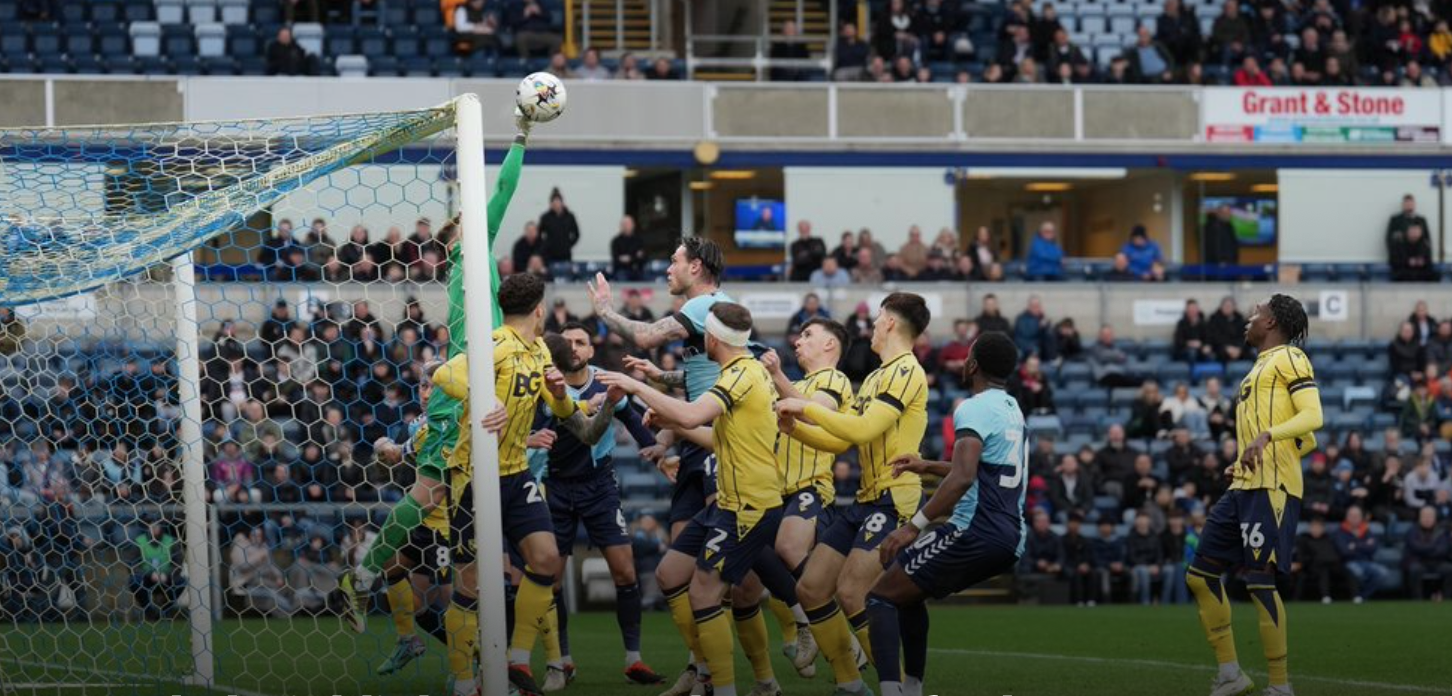
Although he’s gone, the legacy remains, the two towering centre-backs Low and Tafazoli represent little more than a wall to bounce off – no playing out the back with them. Throughout the second half, someone behind me was daring their keeper to roll the ball out, just once. He never did – launching it forward was the only way.
As a result, everything concentrates in midfield, and it’s just about getting hold of the ball and knocking it forward for the wingers and strikers to see what damage they can do. Straightforward stuff, which they’re not likely to change any time soon – by using less, they’re doing more.
By contrast, we sometimes look like we’re more concerned about the marginal gain, trying to master a level of sophistication without having done the groundwork. In the past, we’ve been over-run by Wycombe’s muscularity, leaving with just a whimpering excuse that they don’t play ‘real football’.
There were no shocks on Saturday, Mark Harris spent his time bouncing off Low and Tafazoli, Sam Long was relentlessly attacked by Kieran Sadlier, more than once we relied on Jamie Cumming to keep the score blank.
But, we resisted, Cameron Brannagan, skippering in place of Elliott Moore, was all thigh slapping indignation, an angry ball of energy. In an interview after the win against Wigan he predicted that the game would be ‘carnage’, something he took into his unexpected leadership. I’m not sure it’s a sustainable style, but in short bursts, and particularly against Wycombe, it works better than Moore’s reliable paternal approach.
Alongside Brannagan, Jay Matete, drove a wedge into anything that resembled Wycombe midfield dominance. At the back, self-styled ‘proper defenders’ Stefan Negru and Ciaron Brown properly defended.
It was ugly stuff, but it had to be, no point in complaining while the game passed us by. At one point, even the serene Des Buckingham was gesticulating wildly as the replacement referee let another foul go.
The Wycombe plan is that we’ll eventually wilt, but we didn’t, for the second game running we were able to make substitutions which maintained our energy levels. With McGuane re-charging his batteries, Matete kept the intensity high. Eventually, as their most threatening players tired we started to find spaces. Then the play opened up a little, we could take more measured risks. We made chances, something we conspired never to do at Adams Park under Karl Robinson.
Back in 2003 we played Arsenal in the FA Cup at Highbury, Arsenal were champions but we thought we might at least match them for effort, hoping the it might eclipse their lightweight French style. At one point, David Seaman rolled the ball out to Robert Pires in the right-back position. The ball was played forward at pace, perhaps three players touched the ball before it eventually arrived just outside our box on the left at the feet of Robert Pires. The ball couldn’t have been further away from its starting position, but Pires – mercurial, ball playing, sophisticated – was working harder than anyone else to into position.
The lesson is that even the best teams need to do the 99% to give them the luxury of finessing their football with that marginal 1% gain. It wasn’t pretty yesterday, and our mostly unfounded superiority complex dictates that anything other than a dominant win is a failure, but the reality is that it’s coming up to nine years since we’ve won at Wycombe, taking just one point in that time. Each time, we’ve come to teach them about modern football, only to find that the traditional approach is more than adequate. If what we’re seeing is renewed solidity, focus and determination, then it’s a building block that has sometimes been missing. That, at least, should be recognised as progress.
 Oxblogger
Leave a comment