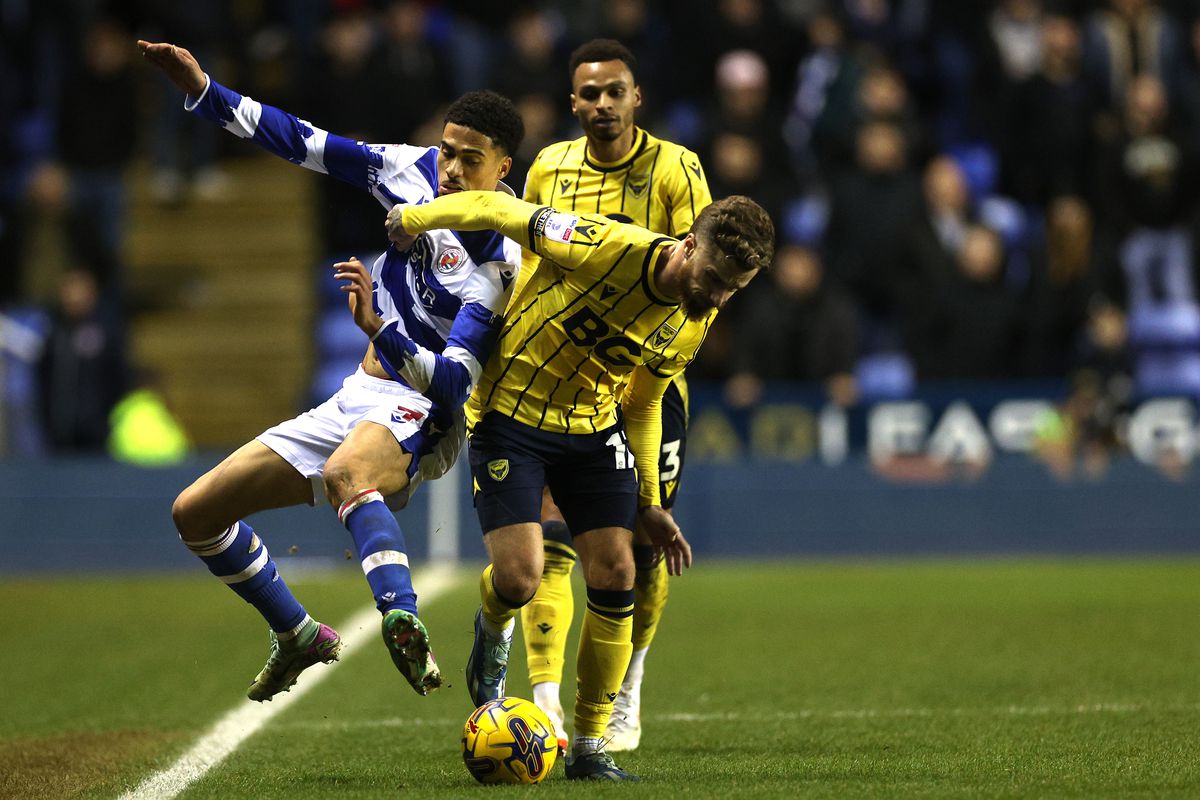
Maurice Evans was the nicest man in football; he was mild mannered, generous and thoughtful, and cared deeply about football’s higher principles. Nobody had a bad word to say about him.
Apart from when it came to Oxford v Reading derbies. Despite his defining moment being as Oxford manager, he was a Reading fan, player and manager. There are lots of examples of Evans losing his shit during derby games in the early eighties when he managed Reading against us, having to be held back from confronting the referee if he felt an injustice had occurred.
The eighties were different times, for our Littlewoods Cup semi-final in 1988, Luton Town relaxed their ban on away fans, principally on the basis of ‘good behaviour’ during a league game between the two sides at The Manor earlier in the season; a game in which one fan was stabbed. Only one, mind.
Reading derbies were vicious back then, it wasn’t unusual for knives to be carried and stones thrown, fans sniffed glue in preparation for violent confrontations before, during and after games.
So, there was a degree of anticipation in advance of the first Reading league derby for over twenty years. Would it be ‘propah nawty’ like the inglorious, violent years of the past? Not really, the world has moved on, policing and stewarding is better, facilities are better, we’re a slightly more civilised community. In fact, last night was rather like a divorced couple joining forces to meet with their son’s headmaster to discuss his behaviour. It was awkward, but the flames of injustice from the past had cooled and there were other concerns to deal with.
Modern football, quite deliberately, no longer offers a theatre for the insanity of the past, the Select Car Leasing Stadium is too big for Reading, even in the Championship they struggled to fill it. There’s little tension in a half-full stadium, the atoms within don’t bump against each other to create the heat and light of previous encounters.
On Tuesday, there was also the slightly odd arrangement that the most vociferous home and away fans were housed at the same end of the ground. It looked like the stadium had been tipped on its side pouring all the fans to one end, which meant most were looking out onto a game with a near empty stadium. There’s something deeply disheartening about arriving full of anticipation, only to be greeted by the apathetic sight of 10,000 empty plastic seats. Not least when you’ve managed to tailor your whole journey to a 7.45 kick-off – fifteen minutes earlier than the actual start.
One of the things which has cooled the rivalry seems to be that, on top of the fact the two teams haven’t played each other for nearly twenty years, even when they did they were heading in different directions. Our last visit to the Madjeski coincided with their ascent up the divisions and our plummet in the opposite direction. During the eighties, our ambitions stretched far beyond conquering rural Berkshire. While we played at being rivals, for the last few decades, we haven’t really met on an equal footing, one team has always been looking towards greener grass yonder. When you get that disparity, it’s hard for both sides to be equally agitated by the prospect of facing each other: it’s like Stockport County claiming they’re derby rivals are Manchester City.
Now Reading are in an existential crisis while we are in our own mini transition. The rivalry still isn’t the central story.
The game followed suit, we pushed the ball around the back four, while they offered a punchier, less cultured, alternative, trying to get the ball forward quickly to create chances. We didn’t look out of control, but they looked more dangerous when they went forward.
The ponderous passing seems to be a product of the cult of eternal coaching; Maurice Evans and Jim Smith are long gone, even Karl Robinson feels like he’s from the old school. In their stead, we have thoughtful, analytical coaches tweaking and trusting the process, obsessing over the finer details, sometimes to the detriment of the end goal of scoring and winning games.
This isn’t a Des Buckingham criticism, the origins of modern coaching come from Billy ‘moneyball’ Beane, coach of the Oakland Athletics. He employed statistical analysis over outdated baseball folklore to outperform his playing budget. The results were remarkable, but they were also brief, others got in on the act to neutralise any advantage, the Athletics never won a World Series and are now largely back to where they were. The revolution didn’t really move the dial.
But, the cult remains, data is mined to find new insights and advantages, but the returns will diminish; if you retain the ball for 70% of the time, you’re probably going to win a lot of games, but if you perfect that to 80% or 90%; the number of points for a win, or the value of a goal doesn’t increase. The cult of eternal coaching risks getting you stuck in a perpetual loop of ever diminishing returns.
You could sense during the first half that Cameron Brannagan, in particular, was trying to contain his frustration with the disciplined shape and passive passing. Last season, it wasn’t unusual for him to have a petulant tantrum when things weren’t working, on a couple of occasions last night he appeared on the verge of something similar, ready to break the pattern of play before pulling back.
Ciaron Brown possesses a similar maverick quality, you get a sense he’s not playing football to achieve technical perfection but to avenge the death of a distant relative. It was fitting then, that he popped up five minutes before half-time in a position he shouldn’t have been in to make it 1-0. He broke the system and benefited because of it.
Reading, you suspect, are at the other end of the spectrum; getting a team onto the field every week is a challenge as they slip deeper into a financial abyss. The drive for data driven perfection is sidelined to pay the electricity bill. The flailing was enough to cause problems, but you sensed a goal would break them.
But, having secured the breakthrough, moments before half-time, one final lurch sent a long ball into the path of Sam Smith to equalise. It had been tepid stuff.
The second half was better, although by this point a fantasy derby win replicating those at Swindon in recent years had long evaporated from the collective consciousness. Buckingham seemed to inject a bit more snap into our passing, a sense of urgency in getting ball down the flanks to create chances. The main beneficiary was Josh Murphy whose movement and speed at times outshone everyone else.
Although they wilted, the cold reality is that we don’t have a goalscoring threat and we’re not making enough chances. By injury or design, we’re just not built to score goals, Murphy flashed a chance narrowly wide in the last minute which the xG perverts would have hated due to its audacity, but breaking the rules is half the battle when it comes to scoring goals.
In normal circumstances, an away point in a derby would have been acceptable, but it felt like a missed opportunity. Buckingham, at least, seems to understand this, in the coming weeks we’ll learn more about what he’s going to do about it.
 Oxblogger
Leave a comment