As Brinyhoof and I left after the Bolton game on Tuesday, we were discussing, perhaps arrogantly, who we’d want in the next round of the FA Cup. I couldn’t make it to the Grimsby game and it’s likely he won’t make the Third Round tie.
What would it take for him to change his plans? The overall experience of last year’s game against Arsenal and previously League Cup games against Manchester City were so cold and corporate, simply drawing a Big Team at home wasn’t enough. An away tie would bring novelty, like Newcastle in 2020, but if it were too big a club we’d probably get a pasting. Equally, you don’t have to go too far down the table before bumping into teams who we’ve played in the league within living memory – Luton, Sheffield United and then about half of the Championship.
It left us with a fairly narrow gauge of acceptable opponents – Wolves? Aston Villa? Nottingham Forest? Southampton? West Brom? Leicester?
It raised the question, what is the point of the FA Cup? It’s been defenestrated over the last couple of decades and is now a husk of what it was. My daughter talks about us playing in ‘The Emirates’ – and I correct her like a stern Victorian father when someone blasphemes by saying ‘blast’ in the house. The Emirates is exactly what the sponsors want but an illustration of the FA’s act of vandalism against its heritage. Following the win, Brian Horton tweeted his congratulations, hoping we’d be rewarded ‘financially’ in the next round. It’s a nice sentiment, but such a shame the whole competition is now measured in pounds and more pounds.
So, what was the point? It was pleasing to see Des Buckingham name a strong team against Grimsby, not out of respect for the competition, but because we played just four games in November, lost our manager and hadn’t scored in a couple of games. While nobody is panicking, rebuilding a rhythm is important.
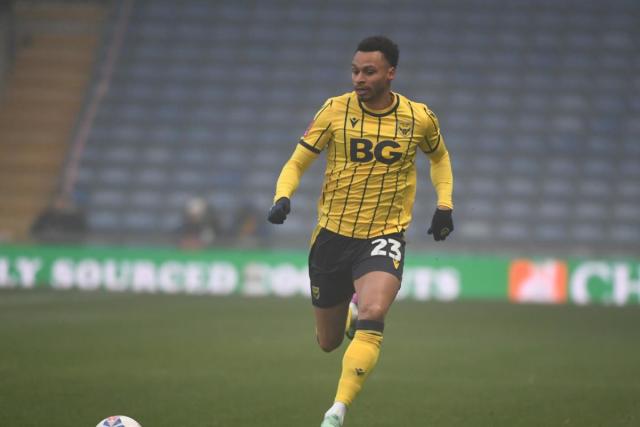
The most notable addition to the starting eleven was Josh Murphy. Having arrived at the club off the back of a bad injury and being immediately labelled the best player in the division by Karl Robinson, Murphy has also had to rebuild his rhythm and confidence.
His absence early last season was never fully explained, the club’s omerta towards player updates just leaves a vacuum into which speculation floods. Was Murphy’s absence down to his injury? Attitude? Something else?
Matthew Syed in his book Bounce says that high performance requires enough arrogance to feel you’re able to compete with the best, and enough doubt to commit to a training regime which will prepare you in the best way possible. It’s similar to Chris Boardman’s assessment of time trialling in a bike race – if you know you can make it to the end, you’re going too slow, if you don’t think you’ll make it, you’re going too fast. The answer to the question – can I sustain this speed to the finish always has to be ‘maybe’.
That’s a lot of mental load, Murphy’s had to calibrate being called the best player in League One with all the material setbacks – injury, bad luck or otherwise. Even something simple like beating a man, you’ve got to feel you can do it, but often something will go wrong. You could be fouled, slightly over-run the ball, be crowded out. There will be groans from the crowd, perhaps the odd shout about how hopeless you are. Somehow, you’ve got to re-set and try again.
Liam Manning started the process of rebalancing Murphy, Karl Robinson’s labelling seemed to weigh heavily but Manning was less interested in the reputation and more interested in the player (more specifically, his numbers). If Murphy could get a few solid 7/10 performances, then that’s the foundation on which to rebuild. It was a coaching carrot approach, not the managerial stick of Karl Robinson.
Murphy put in a cathartic performance against Cheltenham in a pivotal 4-0 win at the end of last season, at one point sinking to his knees in apparent relief that there was still a footballer in him. His break against Grimsby for Marcus McGuane’s goal required six touches, each did what it was supposed to. He’s had moments in the past, but this was the first time he strung it together. Out-pacing the Grimsby defence was relatively easy, but doing it with the ball in a meaningful way much harder.
Murphy probably wants to achieve what Billy Bodin has; he’s a solid seven out of ten performer every week and often goes under the radar. When he arrived, I’d assumed he’d probably hover around the edges of the squad before moving on, but his consistency has made him a key asset. Quietly, he’s become equal top scorer and probably looks more likely to add to his tally than Mark Harris right now.
So, the win against Grimsby was an opportunity to rebuild confidence. For the team, it’s a reminder that we can score goals and win games. For a player like Murphy, it’s more personal and more careful, almost brick by brick. Whether it’ll be quick enough for the club to want to offer him a new contract, who knows? But, Des Buckingham does seem to be the right kind of person to get him back on track.
It may not be what it was, but the FA Cup its playing an important role this season in preparing for the chaos of the next month or so. How we navigate through to the middle of January will ultimately determine our realistic ambitions for the season.
 Oxblogger
Leave a comment