I don’t know how excited people genuinely get about the start of a new season. The correct response seems to be that we should be ‘buzzing’, but who knows if that’s real?
In the past, football was completely shut down during the summer, the Australian football results, tucked away in the corner of paper, were the only indication that the sport existed. There was no big kit reveal, teams added very few players to their squads – Maurice Evans only signed Neil Slatter during the summer in preparation for our first season in the top flight – pre-season happened behind closed doors, season tickets were managed by post, absence made the heart grow fonder and football’s return to the fore in August was genuinely exciting.
Nowadays, clubs dig deep to maintain momentum over the summer period, Oxford went into overdrive with a dizzying array of different brands and marketing – the yellow and black ‘What is your why?’ campaign for season tickets, a festival themed announcement of fixtures, a tortuously long-winded reveal of some icons which have yet to be fully explained, signings geared towards boosting t-shirt sales, carefully crafted irreverent player-cam footage from their week in Spain, some collabs with Truck festival, a local boxer and band, kits were ‘dripped’ or perhaps drips were dropped, or… who knows? Finally the team announcement photo for the first game against Cambridge looked like the police releasing the mugshots of a notorious grooming gang. It’s like someone had accidentally launched every idea the club’s marketing department has ever had.
Jerome Sale has more than once alluded to a change of how the media, and therefore we engage with the club. Information release is carefully managed, more professional. By comparison, promotion under the professorial guidance of Michael Appleton is starting to feel like the Blues Brothers’ ramshackle rampage through mid-town America getting the band back together. Oxford have got slick.
The thing is, modern football marketing and communications comes straight out of the playbook of sports washing conglomerates – Manchester City, PSG, Newcastle United and European Super League ne’er do wells. I’m not suggesting that our owners need their reputations cleaned, there’s no evidence of that, but as the result of petrochemical dictatorships, best practice has become about creating a veneer separating the club from its fans. Like a media mix zone; your closeness is carefully managed.
On one level it works, but on another it doesn’t feel quite real. The kit launches were well executed, but there was something inauthentic about the DJs, secret parties and ‘street’ posturing – one look around the away end at Cambridge might suggest that tech house, the latest pair of Yeezy’s and drill music are not high on anyone’s agenda. The only thing dripping was Bovril.
The summer has been unrelentingly slick with encouraging signings and Liam Manning being reassuringly monosyllabic. No panic here; we’ve changed and we’re ready. Being this assured inevitably brings about frothing excitement. Like going to a friend’s house and admiring how spotless their shower is – how can they work full-time and fight limescale so effectively? They must be superhuman. Cambridge were dead in the water, we were chomping at the bit of promotion, now was now.
But, despite the promising pre-season, you never really know how good your machine is until it’s turned on. There’s a brilliant Twitter account called Boring War, which looks at military logistics. When Russia’s formidable killing machine literally and figuratively got stuck in the mud in Ukraine, it identified that despite all Putin’s posturing, the Russian’s had failed to plan for supply routes and forgotten to service their vehicles. In short, they’d launched the offensive with a metaphorical rooftop party and DJs, they hadn’t filled up with petrol or bought any sandwiches for the journey.
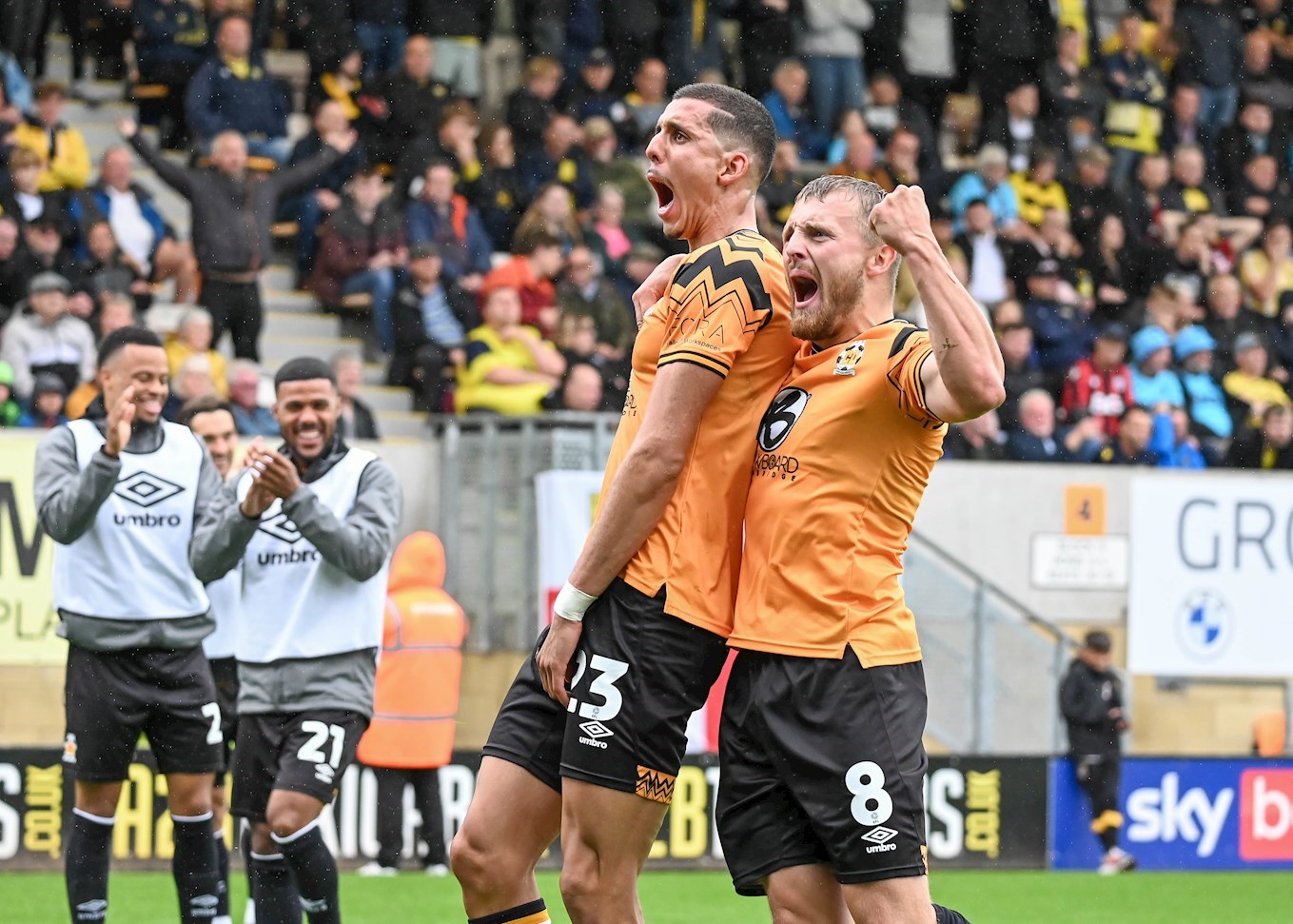
Liam Manning’s battle weapon turned on its photon lazer, but rather than blowing a hole in the universe, the wheels popped off and the stereo started playing China In Your Hands backwards. After fifteen minutes, the pre-season posturing crashed around us, as Cairon Brown was robbed on the half-way line and Cambridge broke to open the scoring. The only person who was happy about that was Nathan Cooper who conjured up something about “Lankester bombing into the area”.
Thirteen minutes later it was two and we were consigned to another opening day defeat. Or, two wins in twenty-one games, depending on how you look at it. Cambridge, who have had a difficult summer, seemed more ready to dig in, more focussed on the here and now. Their ambition might be closer to survival than promotion, but they are at least grounded in reality.
This is not all the club’s fault, although its marketing could be dialled back a little bit; choose a font and stick with it. Let’s be a little less eager. For a club celebrating the fortieth anniversary of our last title win, we’re not used to managing our expectations. I spent the summer watching the Ashes and Tour de France. I’m not a big cricket fan, my muscle memory is too geared to the instant hits football offers, but cycling has taught me the skill of watching long form sport. Summer sports take things at a slower pace, they draw you in, the narrative reveals itself in fragments, you piece it together until it becomes a whole, before you know it, you can’t look away for fear of missing something.
There’s something to learn here; the first game whichever way it goes, doesn’t decide the season. It’s not even a peak, it’s just something to navigate. We don’t need the hype, the inflated expectation, if it were cricket and the opening ball of a test match, we’d just need to play a forward defensive, pat a rough part of the pitch with our bat and prepare for the next ball.
 Oxblogger
Leave a comment