My grandad received an OBE for his role in the invention of radar, a significant advantage for the allies in the second world war. Ironically, the day he died; I was caught speeding by a camera which used the very technology he helped to invent. A parting gift, I guess.
The role of science and technology in the war is not to be underestimated, in fact, it was so influential it created a whole belief system that you can pretty much solve every problem in the universe with science. It created a drive for an increasingly rationalised world – illnesses could be cured with pills, food production could be increased through intensive, mechanised farming, the natural world was brought to heal to serve humans.
We still believe this now, we can’t fathom why things go wrong. In football, there’s a generation of ‘data bros’ convinced that you can answer every question through data. On the Radio Oxford podcast, The Dub, George Elek gave an impassioned argument to dispel the adage ‘you should never go back’ by arguing that if Michael Appleton were to return his success or failure wouldn’t be determined by his previous stint at the club.
In a hyper-rationalised world, that’s true, but narrative does matter. Appleton’s return would have been the re-starting of an old story, the expectation would be that he’d simply start where he left off in 2017. He would immediately be fighting an assumption that his job was half complete just through his presence. He may not have believed that, I doubt he would, but plenty of others would have. Look at Jim Smith, appointed in 1982, it took him more than a year to put in place what he needed to push us to through the divisions, when he returned in 2006, there was a grand assumption that he’d pretty much saved us from relegation by existing. He would just save us and then turn our fortunes on their head. There was a deep sigh of relief, a loss of momentum and we slid out of the Football League.
The appointment of Liam Manning does, at least, give us a clean slate. There was no sign of him during the game against Derby, which felt odd but, at the same time, was probably a wise move. He ticks lots of boxes, he has good pedigree, is likely to continue to play a style of football which the club is already familiar with. It also feels like he’s more of a cog in the machinery, than a totemic leader. One of the issues we’ve had under both Chris Wilder and Karl Robinson in particular, is that they become a single point of failure. The head coach or manager will always be a focal point, but we need to be able to be able to evolve the staff without everything collapsing around our ears. Manning seems likely to be more comfortable in that more corporate culture.
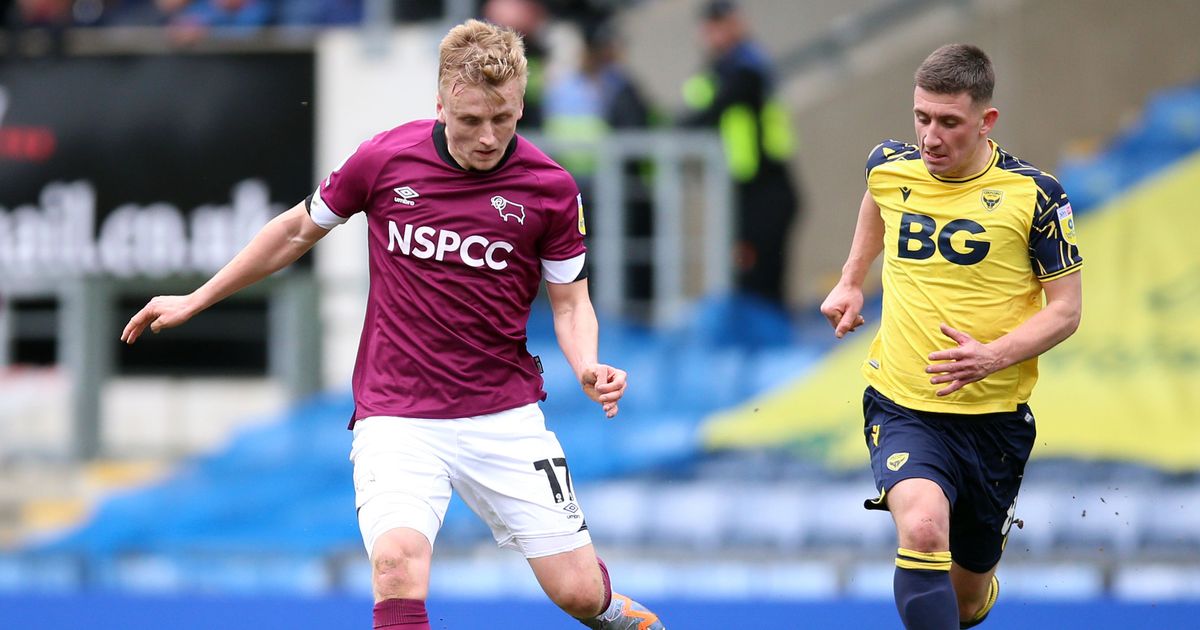
Plenty of people saw the game as a free hit, Derby are a very big club in this division, we’re on an apocalyptically poor run, few thought it would come to an end on Saturday. Manning didn’t need to be part of that narrative, there are still feint echoes of the Robinson era, discussions about how we got here, the poor transfer windows, the tactical chaos.
Craig Short’s brief role as caretaker has acted as a firebreak, we looked generally lighter of spirit, the mood in the stands was less toxic, people clapped missed chances rather than booed, we do seem more settled and focussed on the task at hand.
Still, our predicament hung over us, the visit of Derby should have been a sell-out, but it didn’t break the 10,000 mark. We like to believe that as a group, we’re loyal fans through thick and thin, but truth is, beyond a small hardcore, crowds are determined by whether we’re a winning team or not. What should have been a zinger of an atmosphere, was slightly flat.
We were blunt up front; they were incisive when they attacked. The differences weren’t huge, but they’re enough. The infinitesimal myriad of unobtainable data points, the collective mindset of the squad and fans, the narrative, is still against us.
There is a shape and pattern emerging from the inferno of Karl Robinson’s latter weeks, players didn’t constantly run into brick walls, if Manning can continue to bring that clarity then we have a chance.
It is, ultimately, the only lever he has to pull – to work with what he’s inherited scrubbing away at the increasingly hare-brained and desperate ideas of his predecessor. His unassuming nature, one hopes, is a sign that he’s ready to get into the details; bring simplicity to our purpose, not appoint joint captains, that kind of thing.
This was a transitionary game, rather than the beginning of the Manning story, he now has some time to bed in and prepare. He can work with the players away from the glare, then get his first game out of the way without the burden of an expectant home crowd. If he can bring about a quietness, a sense of calm in our quest to return to form, then his narrative will have begun well.
 Oxblogger
Leave a comment